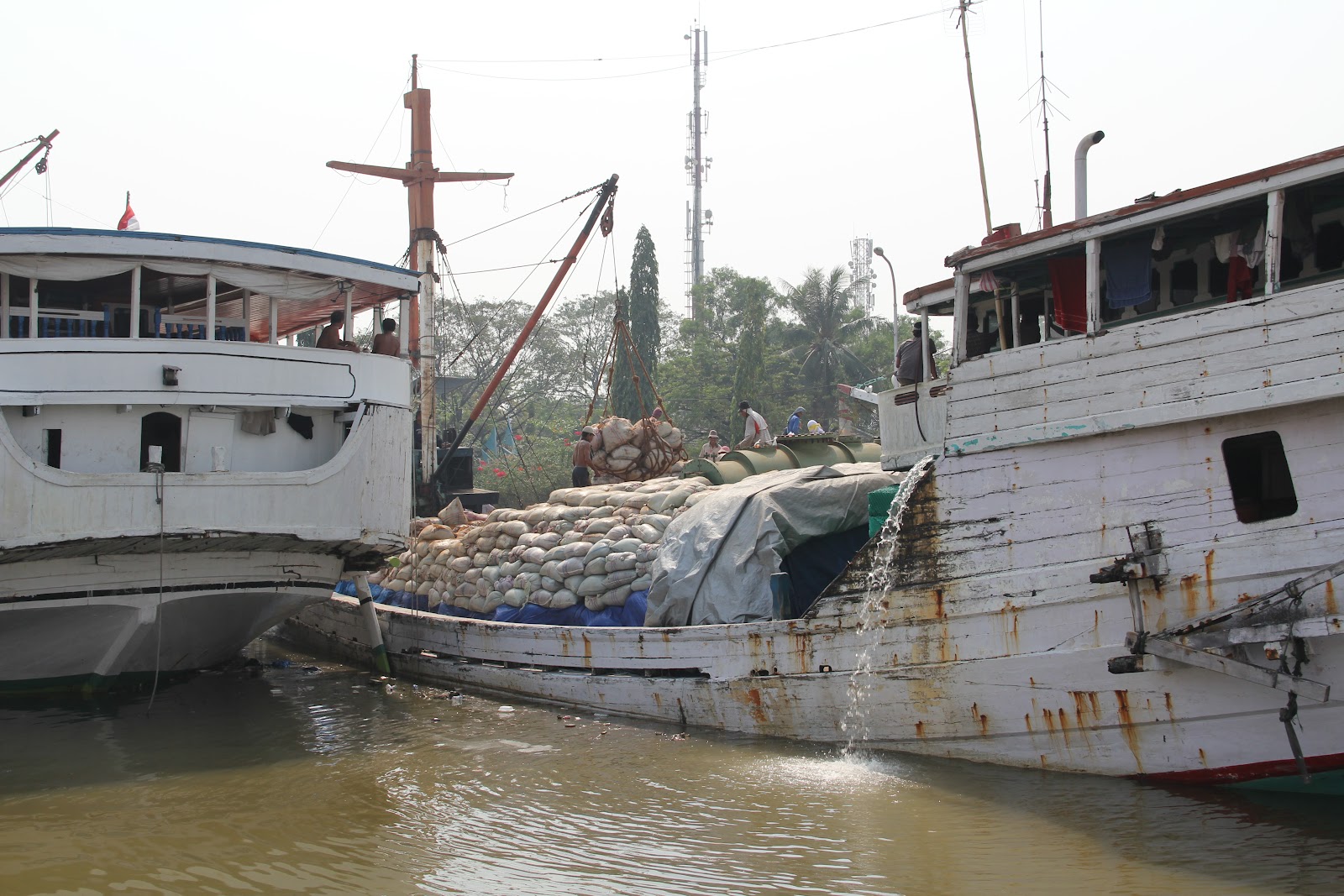
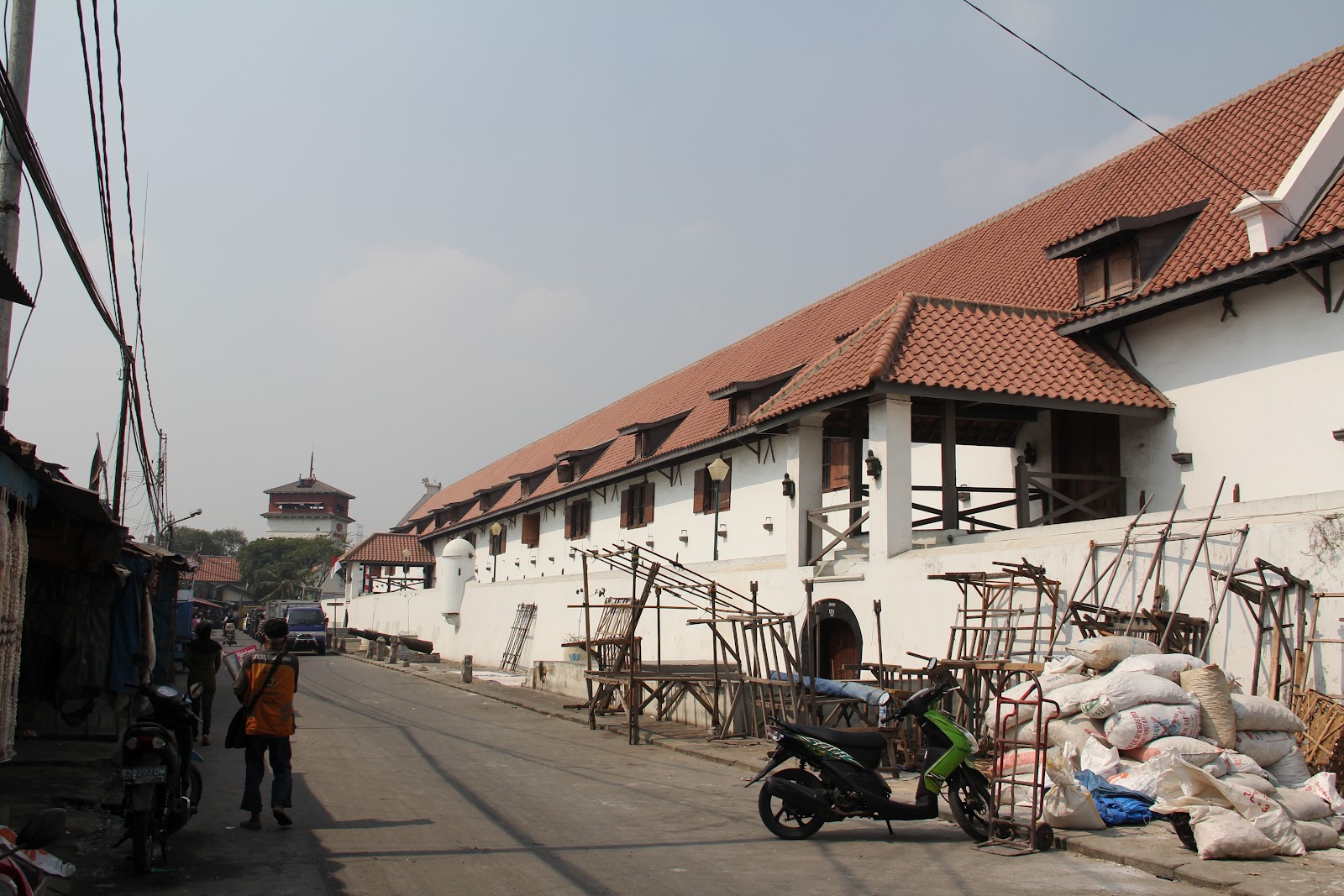
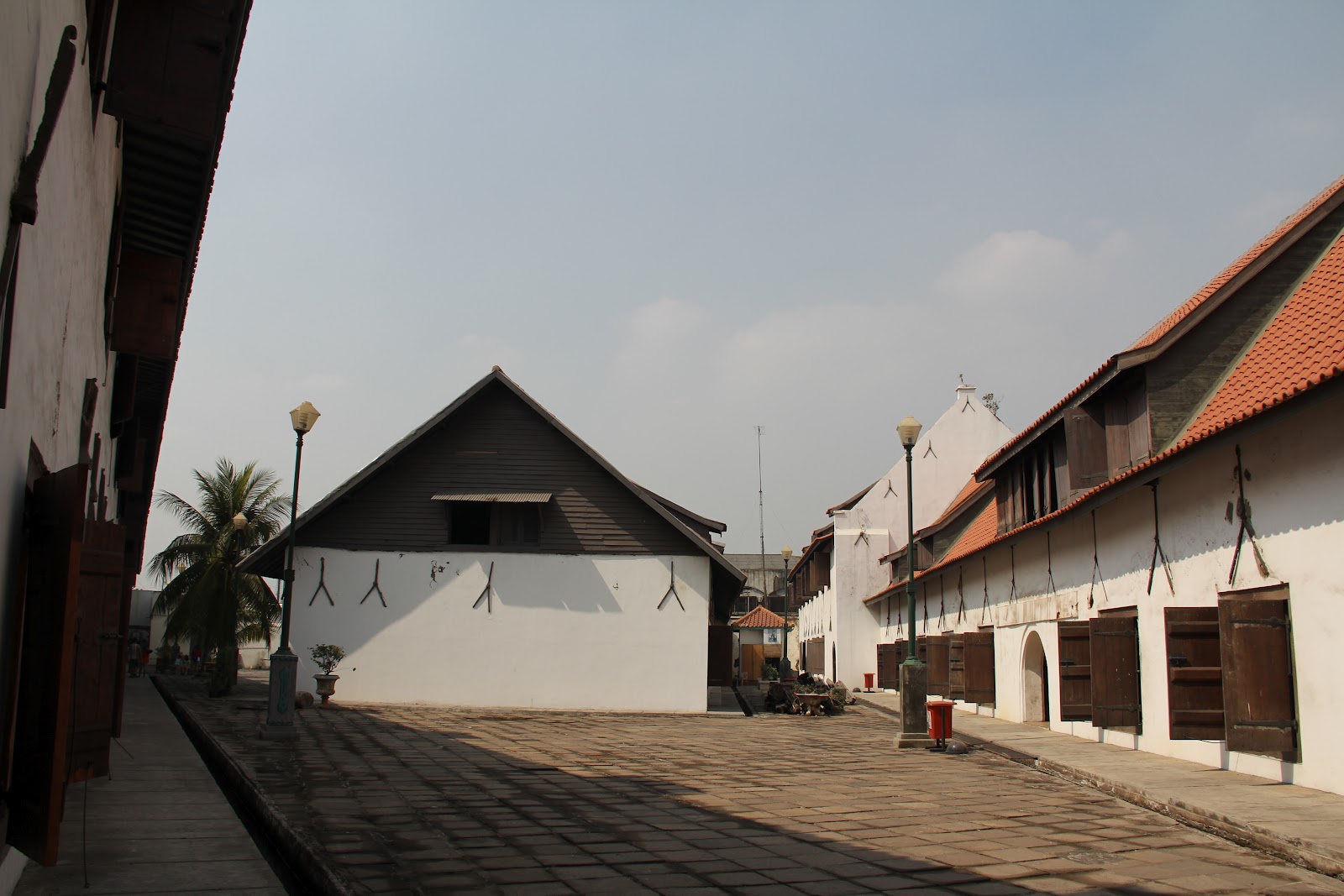
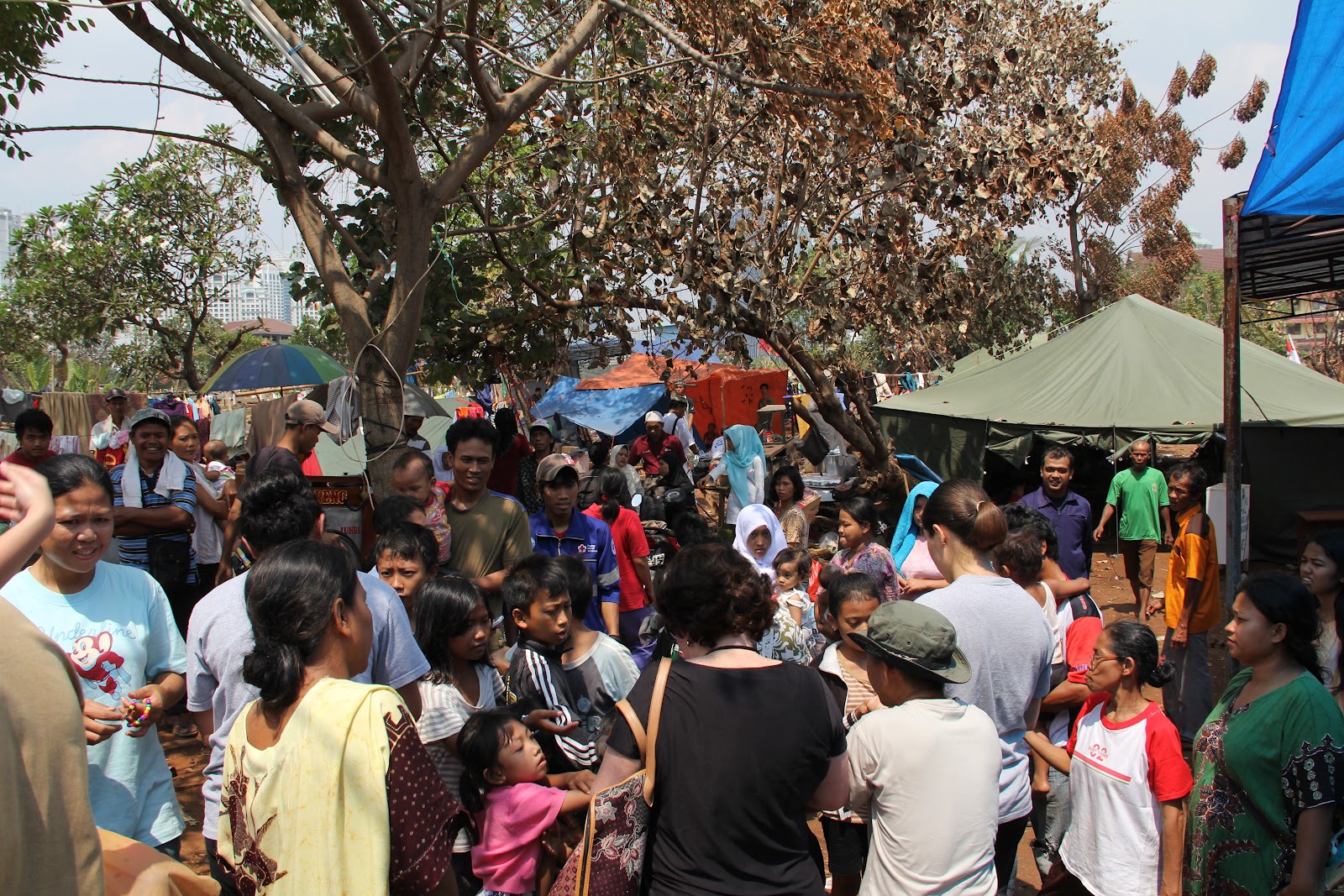
For the past 12 years I have on and off been gathering information for a book I am writing about the history of the LDS Church in Indonesia. With the creation last year of the Jakarta Stake and the Surakarta (Solo) Stake this year, I decide that these events would be a good ending point for my book. I therefore applied last year for funding from the BYU Religious Studies Center, with additional help from Asian Studies, for a final research trip to Indonesia to interview stake leaders for my concluding chapter. Here are some photos and commentary about my two week journey.

Last Sunday I attended church in the Jakarta first ward. I was delighted to run into the Leo family (and visiting friend from the U of U). I first met their son Bobby when he took a class from me at BYU a few years ago. Since then daughter Katrina (left) has taken my Indonesian class and daughter Karolina (black skirt) has taken my geography of SE Asia class. The family joined the church via business dealings and friendship with two Swenson families of SLC--including Sheri Mahas Swenson who was a student with me in Jerusalem in 1982.


After church I walked past Monas (Monument National). the whole country is decked out in billboards, posters, banners and flags in preparation for Independence day on the 17th

I then rode in a taxi for over an hour to this mall in the Jakarta Suburb of Bekasi.When permission to build a regular chapel in this town was repeatedly turned down, the LDS Church and four other Christian churches opted to buy and use as places of worship multistory store/houses in the back section of this retail complex hidden away from the view of some not-so-tolerant Muslims. At the church I hooked up with two elders and their 16 year old companion from the ward who went with me to interview Brother and Sister Sudarsono.

I knew the Sudarsonos in 1976 when I served in Jakarta.I remember talking to her one Sunday when she related to me that in order to get her family of 8 to church that day she had to sell some of her dishes to get enough money for bus fare. That night in my journal I wrote about her faithfulness and commented on how her story reminded me of the poor Zoramites in Alma 32 who were kicked out of the synagogues because of their poverty, but then because they were humble they were willing to listen to Alma. Ten years ago the Sudarsonos served a mission together in Bandung. He now suffers from Alzheimer's--but is well cared for by his wife and daughter--who helps out financially by making and selling delicious snacks including the delicious cheese /mayonnaise rolls in orange.

For my last interview on Monday, I met with Sister Ari--the Jakarta Stake Primary President and her husband Paul Simanungkalit

Before my Tuesday flight to Semarang from the Sukarano-Hatta International airport in Jakarta I enjoyed the wonderful view while taking advantage of these urinals. Do they give awards for best views form a urinal? This should get it.

View of Simpang Lima from my hotel room in Semarang. The mosque in the center of the photo is the same mosque from which I first heard the call to prayer early one Sunday morning after a night train ride from Jakarta.. See story here: http://magazine.byu.edu/?a=1288&act=view.

The hotel rented bikes and so before my evening interviews I took an hour-long, sweaty heat-of-the-day, ride around the familiar streets. Semarang was my first missionary city and I served here for six months. I stopped to buy some more celebratory banners that we like to unfurl in front of our home for special occasions.


Dutch era administration buildings and church.

Would that this could really happen! (Stop Corruption!)

Thursday I rode the train (the return train ride was standing-room only with people returning home to Solo for the end of Ramadan festivities) to Jogjakarta where I met Sister Bertha (successful Jakarta advertising executive who has helped to oversee many LDS Church humanitarian efforts) and Sister Sri Anon (center, who translated many of the LDS hymns and most all of the songs in the children's song book), for a fascinating tour of the volcanic destruction around Mt. Merapi.

A monument and cemetery for some of those killed in the 2010 eruption.

Homes burned by the hot gasses that descended.

Cold lahars of rocks, sand and mud that washed down filing deep, green gorges. Merapi is hidden behind the clouds.

New growth amid the washed down lava rock

At the top-most village in the foothills of Merapi, this car got baked in the hot steam. Noticed the melted hub.

Memorial to one man who died here in his home. He refused to leave because he was the self-declared caretaker of the mountain.


Next morning in Solo, I rode an early morning becak (not his one) to the Kepatihan Chapel to join in Independence Day festivities with first the Jebres Ward and then the Banjasari Ward.

View from my becak ride.

After a morning walk the members enjoyed some aerobics. The other two Solo wards did not hold 17 Agustus parties out of respect for their fasting Muslim neighbors. At this chapel there is a large grassy area behind the church and behind walls unseen from neighbors.

Two of the members were wearing shirts from a previous humanitarian project where Mormons and Muslims (from former president Wahid--Gus Dur's NU organization) in Indonesia worked together. The slogan means "different [religions] but the same"


Member of all ages participated in the traditional krupuk (shrimp chips) eating contest.


I was coerced into participating in the gunny sack races. Note the covered parking lot--35 years ago almost all members in Solo rode bikes or becaks to church. Now most ride motorcycles. A few members even own cars.


I had interviewed my main rival (Marsudi Utomo) earlier in the day,


As he passed me I tripped and decided in the process that I should bring him down too. All's fair in fun and games between two old men.


My efforts to cheat were not rewarded. He got up quicker and went on to win.


Happy members laughing at a later race. The sitting woman in dark red (Sumiati Dedi) is the Solo Stake Primary President. She first served as a Primary President at age 21 in the Bandung Branch.

Young (age 30--first called to be branch president at age 28) Jebres Ward Bishop Awi (Wijoyo Santoso) and his wife Indah Mujiono.

Jaredtia Fund (www. jaredita.org) recipients from the Jebres Ward.

Jaredita Fund facilitators, chaired by brother Rudi in blue. These good volunteers help identify, process and submit school payments for primary, secondary and college students who need help financing their education. It was good for me to visit with JFI helpers in both Jakarta and Solo to see first hand how the funds we raise from Utah get to those in need. Sister Purwantari Wikanto Putri (second from left) is the Stake Young Women's President. She first served as a branch YW president at age 16. During my 6:15 am to 7:00 pm day at the church I was able to interview many good people amidst all the playing and eating.

At 2:00 the Banjasari Ward gathered. They too played games including this energetic soccer game in dresses. Joel and Will do you want to try this some day?

Elder Tessers (right) is the grandson of Dutch/Indonesian (Indo) grandparents who were born in Indonesia. They left in 1948 for Holland and then California where they joined the LDS Church. His grandfather Frits Tessers really wanted to spread the gospel in his former homeland so in 1969, one year after his baptism, he traveled to Jakarta on business with a suitcase full of pamphlets and copies of the Book of Mormon to distribute. The Tessers family see the sending of this grandson to Indonesia as a continuation and fulfillment of his grandfather's dream.

The traditional cutting of the rice cone (slamatan) as a sign of thanksgiving and celebration. Bishop Djamoen (originally from Semarang) is in red. He, as the leader of the group, is presented with the cone top of rice by the eldest member of the group Brother Tommy Simanungkalit (father of Paul above) who I knew in Jakarta in 1977.

I met Sister Baantjer (right) a few weeks ago while role playing as an investigator at the TRC (Teaching Resource Center) at the Provo MTC. Her Dutch father served a mission in Indonesia in the late 1970s. Her mother is an Indonesian who was living in the Netherlands where she met her husband. The family now lives in remote Ferron Utah. She is still smiling after just one week in Indonesia

Night fall at the kepatihan Chapel where I spent a delightful day. A few buildings up the street is an internet shop (Warnet). Last year a man used the internet at that shop. He then walked past this busy building where one ward was in sacrament meeting and the other was in the third hour of meetings.

He then walked a hundred meters further down the street turned the corner and walked up to the door of this also busy Pentecostal (Bethel) Church and detonated himself. Many parishioners who were leaving the meeting via the door were injured, but only the suicide bomber died. No organization ever claimed responsibility, so probably the work of a lone man. Mormons up the street heard the blast. Why he chose one busy church over the other is unknown. A sad reminder of the lack of religious tolerance by some in this land.