Monday, January 9, 2023

Traditions and Transitions


Already, it was not a traditional Christmas. In years past I would have had much of the Christmas shopping completed. Finally, two weeks before Christmas I had a few ideas. One was to get newlyweds Joel and Emma a cast iron aebelskiver pan so they could be the fourth generation to enjoy the delicious Danish round pancakes that both of my grandmothers, then my mother and finally me had prepared for Christmas morning breakfasts. 

The pans are not easy to find, especially because postal delivery (I had ordered these pans online for wedding gifts for several nieces over the years) would be cutting it close. I turned to Google. It directed me to the Bosch Kitchen Center in Sandy. Off I drove. I always enjoy a drive at Christmas time because it means non-stop Christmas music. 

The Bosch Kitchen Center was a good choice. One nice clerk quickly directed me to the heavy aebelskiver pans--a dozen or so stacked in boxes on a sturdy shelve. Another nearby clerk (both were women in their 50s) had never heard about aebelskivers so we both tried to describe the fluffy dough balls that are delicious covered with homemade fruit jams (peach and raspberry are my favorites), syrups (homemade chokecherry for sure) or lemon and powdered sugar. 

The second clerk then helped me find a cool rolling pin for Sarah (on her list). I leaned towards the traditional wood rolling pin, but the nice woman encouraged me to buy the fancy pin (when asked she said it is what she would buy for her 24-year-old daughter) with rings on the end that make sure the thickness of the cookie or pie dough was even. 

I left the two items at the back counter by all the specialty foods and continued exploring. Eventually I found some sheet cake pans for toasting holiday pre-skiing breakfasts of English muffins (also wonderful vehicles for fruit jams). 

When I got to the counter to check out, the rolling pin helping, non-aebelskiver knowing clerk stepped up to check me out. Perhaps just to be nice, she asked me more about the aebelskiver pan. I happily described the process of making them (folding in whipped egg whites is one step) and the various options for topping them. I explained that I was buying the aebelskiver pan for my recently married son and daughter-in-law so they can carry on a what may be a century long family tradition.  She then explained how in a recent lesson with the young women of her congregation (certainly LDS) they had talked about family traditions and the holidays. I don't know what came over me, but as we chatted about families and traditions, out of no where, my voice started to crack and weaken and tears started to well up in my eyes. 

It's not usual to come to tears over cast iron pans, so I'm sure the woman was a bit surprised. I decided to explain my break down. I told her that I had recently separated from my wife and was going through a divorce, that I was shopping not just for Christmas but also to fill in missing essentials for my apartment kitchen, and that I had no idea how the upcoming holiday season would be celebrated as a two-domicile family. Somewhere in the midst of all of that I also mentioned that I was gay. She then stepped out from behind the counter and asked if she could give me a hug. I tearily said yes and then she gave me a big motherly hung. Just what I needed. She explained that she had a gay son who had come out seven years ago at age 18. When I inquired, she explained that he was doing just fine. 

I left the Bosch Kitchen Center in a mix of emotions: happy to have met another (of many who have reached out to me) kind and understanding ally but still sad about the uncertainty of the upcoming holiday season. I knew that there would be lonely and sad times ahead (there were), but I decided that I would endeavor to hold on to beloved traditions when possible. I also determined that I would need to be creative and flexible and willing to skip some traditions or start new traditions. The main point was to ensure that the kids and I would be able to spend time together.


I started by putting up a single string of red, green and white lights on the porch of my apartment. As I have done for years, I also put up 10 similar strings on the apricot tree of our Springville home. 


One, unintended porch decoration was this peacock who decided my porch railing would be his nighttime roost from sunset to sunrise. Perhaps he liked the nuts I left out for him earlier in the year when my car in the car port was a favorite observation point for him. For about four straight weeks and in the freezing cold he never missed a night on the porch. On one of his first nights, he roosted near the stairs and his guano dropped in big white piles on my porch so two evenings in a row I threw cold water on him. He was a quick learner and moved to the far end of the porch. In this location most of his droppings drop to the ground cover below. I would always say hello to him as I came and went.  I have since learned that Krishna was a gift from the Hare Krishna temple to a family in the neighborhood across state street. He escaped when harassed by dogs. My landlord told the owners that Krishna was on my porch so the other night they came to catch him. At 10:30 pm I heard a ruckus on the porch. They had tried to throw a blanket over Krishna but missed and he flew away. He came back a few nights later, but when he saw me he flew away, perhaps thinking I was the one who turned him in. Krishna was a nice holiday friend. 


I put out decorations inside, but no tree. 


On the 18th the celebrations began with the Emmett family gathering at my sister Mary's house in Mapleton. We have been doing a live nativity for at least 30 years. I am always the narrator and keeper of the costumes (gathered from my many travels in the Middle East). These are some of the great grandkids of my parents. 


My niece posted this photo of her daughter as Mary and her son and a cousin as the wise men. I was busy narrating and missed the giggles of Mary. So cute. Later in the talent show Joel and Will surprised me with a rousing rendition of Oh Were from Nairobi--as we once performed it in Jerusalem --watch it here: https://beitemmett.blogspot.com/2010/09/blog-post.html

For the community sing along, Emma Gunn Emmett got a shot out and welcome to the family in the lyrics to Home for the Holidays that I revise every Christmas. 

Home for the Holidays 2022

Oh, there's no place like home for the holidays
'Cause no matter how far away you roam
When you pine for the sunshine of a friendly gaze
For the holidays you can't beat home, sweet home.

We gather each year for some food and fun

And child nativity

And we welcome new folks to the family

We welcome baby Leo Kamrani and new bride Emma Gunn

So from homes across the region we all join in celebration.


Oh, there's no place like home for the holidays
'Cause no matter how far away you roam
If you want to be happy in a million ways
For the holidays you can't beat home, sweet home


I took Christmas Rocks (my favorite neighborhood gift from Logan) and sent some home with all of my siblings. 


I also took our traditional appetizer offerings of shrimp cocktail and frozen grapefruit with Sprite. 


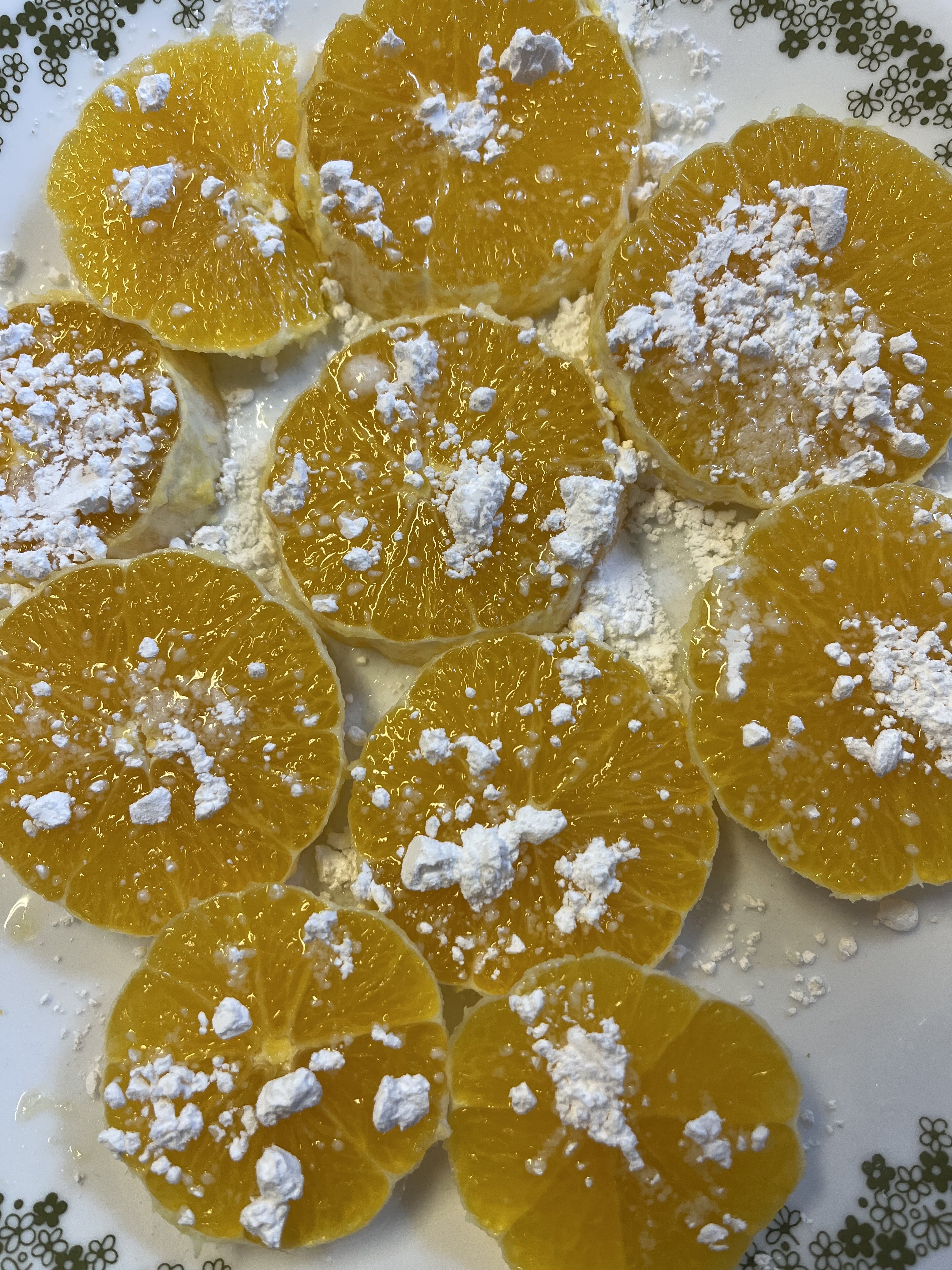
Christmas Eve the kids were with the Tueller family so I joined my sister Mary and her family for their Christmas eve dinner, songs and games. Next morning, I slept in. No aebelskivers this year, but I did have powdered sugar on sliced oranges--a long time companion of the traditional aebelskiver breakfast.  


Christmas afternoon the kids came over. 


We exchanged gifts.  


Sarah is smiling as she opens her fancy rolling pin.


I was delighted with this thoughtful gift from her. 


Ala The Christmas Story we enjoyed Chinese (takeout) food for our Christmas dinner. We have done this a few times before, so it may be on its way to becoming a tradition. 


Then at Sarah's recommendation, we cut and tied five fleece blankets to donate to Primary Childrens Hospital. When Sarah was a patient there she received a similar blanket so a few days before Christmas the two of us went to Hobby Lobby and bought enough fleece material to make five blankets. 


While cutting and tying we watched Home Alone 2. 


Notice the aebelskiver pan box.


It was a happy, fun, productive, relaxing, tasty Christmas day. 


Knowing that time with the kids would be limited and divided, I invited them to join me for a two day ski vacation where we could all be together for an extended period of time. On the afternoon of the 26th we drove to Logan where we met my brothers Tom and Bill and his wife Lorie for pizza at Fredrico's. We then drove to Garden City where we rented a condo for two nights. 

Next morning we had English muffins--topped with eggs and sausage or homemade jam for breakfast. We then drove 15 minutes to Beaver Mt. where he had lots of fun. Sadly, Sarah twisted her leg mid-day while skiing in the powder. 


Sarah sat out the afternoon skiing. Once showered and changed we drove north to Paris Idaho to see the Tabernacle built by Tueller ancestors. Trader Joes Lasagna for dinner followed by games and a movie. Next day Sarah's leg was still sore so after a repeat of English muffins we headed back home and a check up at the doctors--nothing serious but no skiing for a few weeks. 


One of the perks of being a twice a week lifty at Deer Valley is that I ski for free and my student dependents under age 24 (Joel and Will) get to ski for free too. Plus I get five extra passes for Emma and Sarah to use. These passes are not valid during the holidays, but on January 3rd and the 7th we put them to good use at Deer Valley with two fun days of skiing all the wonderful snow that has fallen this season. 


Sunday the 8th was had one last gathering before Sarah heads back to Boston. I fixed what has become a New Years tradition--only this year a week later. My rainbow platter (on my new sheet cake pan) was first introduced as the after baptism family dinners when each of our children were baptized. It then transitioned to a New Year's tradition.  A few years ago I added cheese fondue to the menu. 


Cheese fondue and fixens. 


At the end of dinner, we were treated to a beautiful sunset from my back balcony. I'm taking it as a sign that there are good times ahead. 

Many thanks to Sarah, Joel, Emma and Will for being so flexible, amenable and pleasant. I know this was not an easy or traditional holiday season for you either. Transitions, such as our family are going through, can be challenging but they can also introduce new joys and new traditions. That is my hope. 

Friday, September 30, 2022

Retire

Retire- From French retirer, from re-, "back" and tirer, "throw," its first sense was "withdraw 
to a place of safety or seclusion."

Farlex Trivia Dictionary. S.v. "retire."   https://www.thefreedictionary.com/retire


I officially retired from BYU in July. I have loved so much about my 30 years as a geography professor. BYU students are fantastic--many of them have become life-long friends. BYU support and funding for research and travel helped me explore and better understand far flung parts of the world. BYU colleagues are engaging and kind. BYU facilities, including the well-manicured (but perhaps overwatered) grounds, are unparalleled. 

While many people rejoice at coming to the end of a career, this retirement was a bitter-sweet move. I didn't just retire from work, but, as in the more archaic meaning of the term, I also felt compelled to withdraw to a place of safety--mental and emotional safety. 

Throughout my career I have researched and published on a broader variety of topics than the ordinary, more focused scholar. This was the direct result of global terror and BYU's ultra-cautious and very restrictive travel policies which forced this regional geographer to shift from doing the Middle East (no thanks 9/11), to Southeast Asia (no thanks Bali and Marriott bombings), to security and safety of women, and then back to Indonesia. 

Looking back on my research and publishing endeavors, the only common thing (certainly not a specific region or focus as initially planned) is that most of what I have done has been centered on underdogs, the marginalized, the victim, those in peril, and those seeking peace. I have tried to champion their cause. 

Much of my early work (and some later) focused on peacefully sharing land and sacred space in religiously plural places. Most often I focused on the stateless Palestinians and waning Christians in the Islamic world. My dissertation and subsequent book Beyond the Basilica: Christians and Muslims in Nazareth (University of Chicago Press), looked at how two religious groups bound together by Arab culture and their minority status in Israel coexisted for centuries only to be fractured beginning in 1989 with the re-emergence of an Islamic-based political party. In 'The Status Quo Solution for Jerusalem" Journal of Palestine Studies, I proposed that the century and a half long truce in The Church of the Holy Sepulcher between rival Christain factions could be used as a model for a way in which both Israelis and the beleaguered Palestinians could share Jerusalem as a capital for their two states. "The Capital Cities of Jerusalem," in The Geographical Review, also proposes that Jerusalem be a fairly shared capital that can then be equally enjoyed by all who live there. Jerusalem’s Role as a Holy City for Muslims,” published in a special edition of BYU Studies about Islam, makes the case that Muslim attachment to the Holy City is equally valid thus necessitating that there be parity of Jewish, Christain and Muslim influence and presence in the city. 

In both "Sharing Sacred Space in the Holy Land." (in Cultural Encounters with the Environment: Enduring and Evolving Geographic Themes.) and “Contesting Religious Heritage in the MENA Region.” co-authored with Daniel Olsen (in Cultural and Heritage Tourism in the Middle East and North Africa), I helped describe and analyze how religious communities do and do not share sacred places. Later in “The Siting of Churches and Mosques as an Indicator of Christian-Muslim Relations.” Journal of Islam and Christian-Muslim Relations, I used research in both the Middle East and Indonesia to analyze how the locating of places of worship--church and mosque--could help to better understand how Christians and Muslims have contended and coexisted through the centuries. 


When the Middle East was shut down to BYU scholars, I decided to shift my focus on Christian-Muslim relations from the Middle East to Indonesia. I set out to tell via hundreds of interviews, journals, letters and documents how a tiny Christian sect (The Church of Jesus Christ of Latter-day Saints) was able to slowly establish itself in the largest Muslim country in the world--not an easy endeavor that spans 52 years of opposition, setbacks and restrictions. The book is still a work in progress with hundreds of pages written and still a few more to go (Listen to a lecture from early research here: Taking Root lecture). Along the way I published a book chapter about how pious merchants---Hindu, Buddhist, Muslim, Christian and Mormon helped to slowly spread their faiths throughout the archipelago ("Pious Merchants as Missionaries and the Diffusion of Religions in Indonesia" in The Changing World Religion Map: Sacred Places, Identities, Practices and Politics). I also was invited to write “Tantangan yang dihadapi oleh Gereja Yesus Kristus dari Orang-Orang Suci Zaman Akhir di Indonesia” (Challenges facing The Church of Jesus Christ of Latter-day Saints in Indonesia), Maarif which highlights some of the challenges and even successes (fostered by Church humanitarian aid) of the Church in Indonesia. 

When Indonesia shut down, my friend and colleague Valerie Hudson invited me to join her at the beginning stage of what became the WomanStats Project. Over many years and with the help of many wonderful student coders we compiled the largest data base in the world dealing with the status of women around the world https://www.womanstats.org/. With that data we created scales and maps showing how secure women were in their various countries. Also scaled and mapped were topics related to such varied topics as maternal mortality, life expectancy, domestic violence, rape, FGM, child marriage, education, trafficking, political participation, and inheritance. Eventually our research was published in several journal articles and then in the Emma Watson and Gloria Steinem praised book Sex and World Peace (don't judge, the publishers said sex sells). The main thesis of the book is that the "very best predictor of a state's peacefulness is not its level of wealth, its level of democracy, or its ethno-religious identity; the best predictor of a state's peacefulness is how well its women are treated." The WomanStats Project has launched and supported via its data many projects that call for increased efforts to improve the status of women and girls in every country of the world.


In an amazing convergence of two of my divergent areas of study, I learned about FGM (Female Genital Mutilation) through WomanStats and then, through my research about the LDS Church in Indonesia, I learned that some LDS parents were having their daughters ceremonial pricked (the mildest form of FGM). I began to wonder, what might be the case for LDS women in other parts of the world where FGM is practiced. "Female Genital Cutting and Mormons" was published in 2016 in Square Two, an online journal dealing with contemporary LDS topics. It recommended that the Church research FGM among Mormons in Africa and that it issue a condemnation of the practice like many other religious organizations had already done.  I'm happy to report that four years later (and with letters written to the general Relief Society and Young Women presidents) the Church added a statement of condemnation for FGM in its Handbook of Instructions. I have no idea if my article and letters were part of the process, but I sure hope so. https://beitemmett.blogspot.com/2016/09/fgm-and-mormons.html Now if only there was greater (actually any) effort to teach members that FGM is not an acceptable practice. 


In my final few years at BYU, much of my work was focused on an interdisciplinary and inter -university study funded by Geoscientists Without Borders that focused on better understanding the vulnerability of seismically challenged Indonesia to tsunamis. See for example: "Perceptions of tsunami susceptibility and self-efficacy among adolescents in Indonesia: The influence of gender, religion, location, age, hazard information source, and past experience", (multiple authors) International Journal of Disaster Risk Reduction. Part of our research included outreach (my main focus) to schools, civic leaders and villagers. We taught children in dozens of schools on four islands that if they feel the earth quake for more than 20 seconds then there is a significant chance that a tsunami may strike. That means they have 20 minutes to get to an elevation of 20 meters (fourth story or up a hill side). I'll always remember leading an evacuation drill of several hundred junior high students, with all of the girls in white jilbabs, out the back yard of their vulnerable seaside school and up the hill side to a safe elevation. Our 20/20/20 efforts have since been adopted by Indonesia's Disaster Mitigation Agency as part of its tsunami awareness curriculum. Who knows, one day some of those school children may survive a tsunami because of our team's efforts.   


My interest in and desire to help the marginalized, underdogs and victims also extended to advocacy at BYU. While serving as Coordinator of the International Studies program I went to bat for a large and well-organized group of students wanting BYU to create a development major when a development emphasis within IS was discontinued when the new econ and poly sci heavy IR program was created. The hard work of the students along with advocacy from me and other faculty was not successful.  

While serving as advisor to the Muslim Student Association, the Muslim students on campus decided to hold a Muslim-Mormon break-the-fast potluck dinner on a fast Sunday evening during the fasting month of Ramadan. The wonderful idea was to build bridges between Mormons and Muslims both of whom believe in fasting. I was tasked with reserving a room for the event in the Wilkinson Student Center only to find out that there are rules that only allow LDS wards and stakes to reserve rooms in the WSC on Sundays. I lobbied up through three levels of student life administrators, ending with the VP of Student Life. Even after explaining about the event, with its admirable objective, and how the Muslim students (and other non-LDS religious clubs) had no other place to gather, the VP denied our request. With only two days to find a place, the students were able to arrange to meet in the foreign language housing commons area. That Monday I wrote the VP a respectful (well sort of) letter explaining how the deeply hurt Muslim students deserved an apology and then I quoted Elder Neal A Maxwell. 

“Rules are useful, but these must merely mark where the borders of conscience end. Rules have a way of pushing conscience back, and yet further back. Besides, each human and each human situation are sufficiently different that rules thus multiplied become like the unpruned tree. A lively conscience can cut through to the justice of any situation” (Of One Heart p. 24). 

That letter I later learned won me the moniker of "loose cannon" from the VP. At least that is how my dean told me she referred to me. 

In my three-year service on the Faculty Advisory Committe, I served on the teaching committee. One of the items we came up with was a proposal to add some sort of spring break to the academic calendar so that in the long haul from Presidents Day to finals, students had some sort of mental health break. Surprisingly our proposal was accepted in a truncated form--one Friday off in mid-March. Somedays you have to take what you can get. 

During the 2009-10 academic year I taught three semesters of Old and New Testament classes at the BYU Jerusalem Center. A delightful duty. During that year our family got to be good friends with the few Arab LDS families in the tiny Bethlehem group. We were even invited to a wonderful Christmas Eve gathering in one of their homes (which required special permission and a stretch of the rules). After returning home I learned how new and ongoing JC policies had impacted the livelihood (banned from selling souvenir baby blankets to the students) and feeling of inclusion (JC faculty could not visit on Sunday or home teach members in their homes) among the members in Bethlehem. I eventually wrote letters to two administrators explaining the problems and recommending changes. In response to one of the replies explaining the reason for all of the rules, I dug up Elder Maxwell's quote to use again. 


After returning I also stood up for a few students who while at the JC had been disciplined for going into the Old City after dark and for sneaking into a hotel for a dip in its pool, only to return to BYU and find they were being doubly punished with an Honor Code warning that then impacted their applications to graduate programs. I wrote letters to the Honor Code office explaining the double punishment and the background for the infractions. Something must have changed for eventually two of the students were able to get admitted into medical school.

A few years later when I was all scheduled to teach a two-week course at the Center on the Israeli-Palestinian conflict to the Jordan Intensive Arabic students, I learned that I was banned from ever teaching at the JC because I "might be disruptive". I guess I ruffled too many feathers. I'm not sad I ruffled, but I was devastated by the ban. Read all about it here: https://beitemmett.blogspot.com/2015/08/banned.html

Most recently I oversaw the creation of a list of resources for students at BYU so that they were more aware of the many options for getting help for sexual assault or discrimination of any kind. see here: https://beitemmett.blogspot.com/2020/08/for-byu-students-in-need-of-help.html. I also served for the past two years on our college's BIPOC committee helping to promote greater inclusion and diversity at BYU.


I have documented the advocacy portion of my academic career at BYU for a purpose. In 2011, I finally admitted to myself that I was gay. It took me a few more years to come out to my family. I have refrained until today from coming out more publicly because I didn't want to draw attention to my new reality, nor did I want to jeopardize my job (for house payment and insurance reasons). The mental trauma of trying to balance being employed at BYU with being gay took its toll. I needed my job (efforts to find a job elsewhere all failed), but to keep my job I felt I had to remain closeted. Sometimes my despair turned to suicidal thoughts. Read more here:  https://beitemmett.blogspot.com/2018/12/at-railing.html 

Last fall, I finally came to the realization that I needed to be a champion one more time, for myself. This meant I needed to stand up for my own mental health and my own peace. I could no longer endure in what I increasingly felt was a marginalizing, threatening, non-belonging environment. Listen here: https://www.youtube.com/watch?v=CUEBJ3NdaCs or read here: https://www.sltrib.com/religion/2021/08/23/we-must-have-will-stand/. So, I chose to withdraw to a place of safety (retire), two years earlier than planned. I am now happily teaching two adjunct geography classes at UVU, substitute teaching in Nebo School District and this winter I'll also be a lift operator at Deer Valley two days a week (yay for free skiing). 

I wish I could have done more to mentor and befriend the many LGBTQ+ students at BYU who took my classes over the years. Many, after graduating, finally dared to "come out". When I found out I would write to them offering my support and telling them they were not alone. I only wish I could have done so when we were all closeted at BYU, hoping for friends, support and understanding, but instead feeling alone, fearful, and without hope. To those students and to all who feel marginalized, I will walk with you, and I hope you will walk with me.

Best wishes to BYU in its new belonging initiative. The gay students, staff and faculty at BYU deserve a more inclusive environment. May there be positive changes to ensure that all who enter truly feel welcome, safe, seen and loved.  


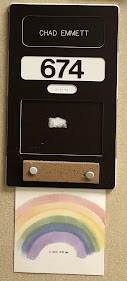
Thanks to BYU grad Kayla for this artwork (found on Etsy) that I posted outside my office door last September. 


Please also see this fine Salt Lake Tribune article by Peggy Fletcher Stack:  https://www.sltrib.com/religion/2022/10/10/after-remaining-closeted-years/


Monday, September 5, 2022

Mayor's Cup Champions

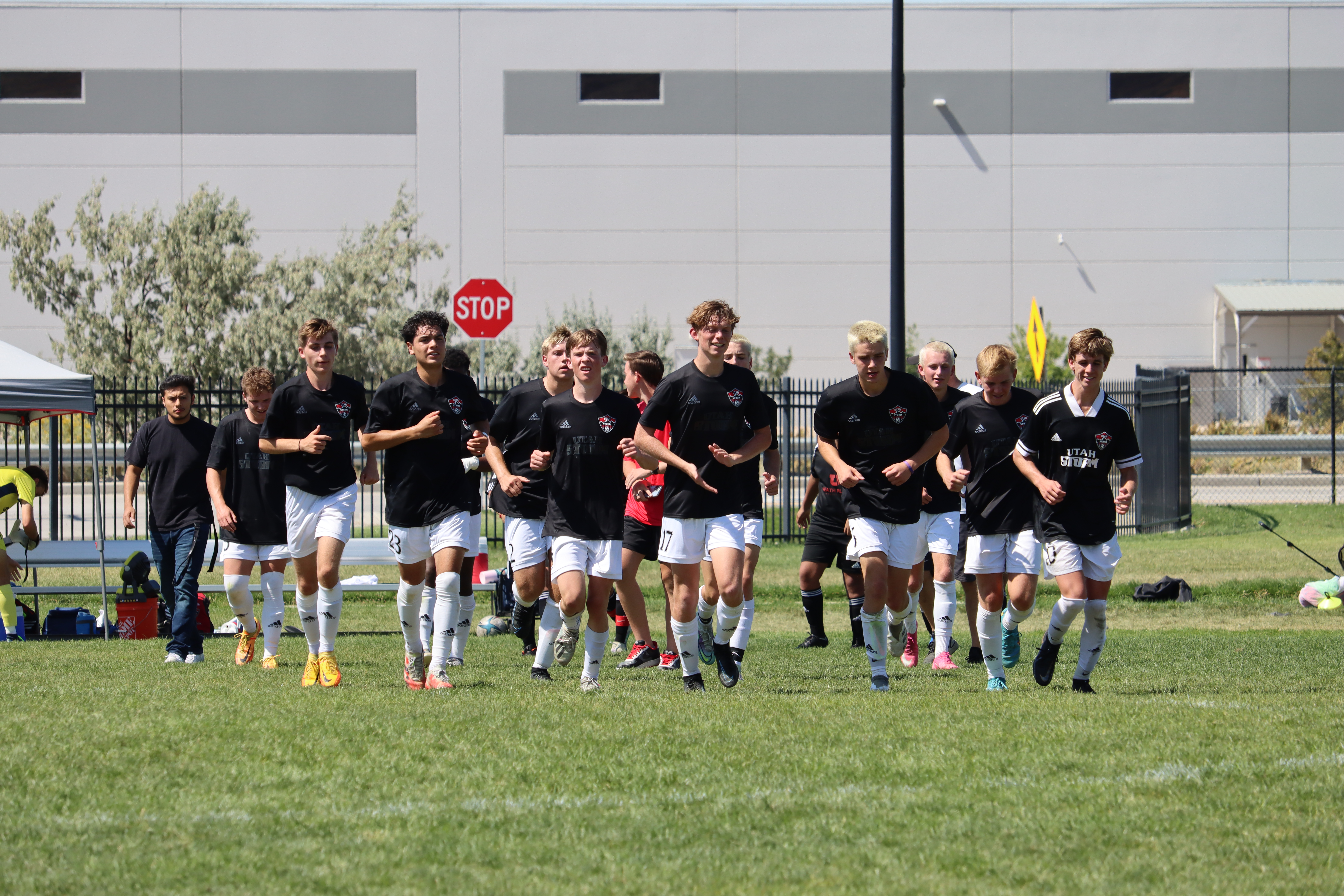
Today Will's Utah Storm soccer team won the 04 division of the Mayor's Cup Tournament. All four games were played at the Regional Athletic Center (RAC) in SLC near the airport on a week when today was the seventh consecutive record-breaking day of 100-degree temperature. It was hot. The team was cobbled together last June (while Will was in Indonesia) with boys from about five different teams in Utah Valley. All of the O4 (boys born in 2004) teams from last year were depleted of most of their players when the majority of their teams graduated from high school. This left the September-December boys scrambling to find a team. Coach Brett (father of one of Will's teammates from the past few years) rounded up a good crew. They first played together in July at the prestigious Surf Cup in Oceanside California, where they didn't do very well. Since then they have come together as a team winning their Tuesday game 1-0, Wednesday's game 3-0, Saturday's game 4-1 and today's championship game 1-0, thanks in part to a corner kick from Will to a teammate who connected with the goal. 


This is the corner kick that connected with a teammate who kicked in the winning (only) goal. 


"Seek Shade" was the mantra of all the games. 

Consulting on who and how to kick the penalty kick. 


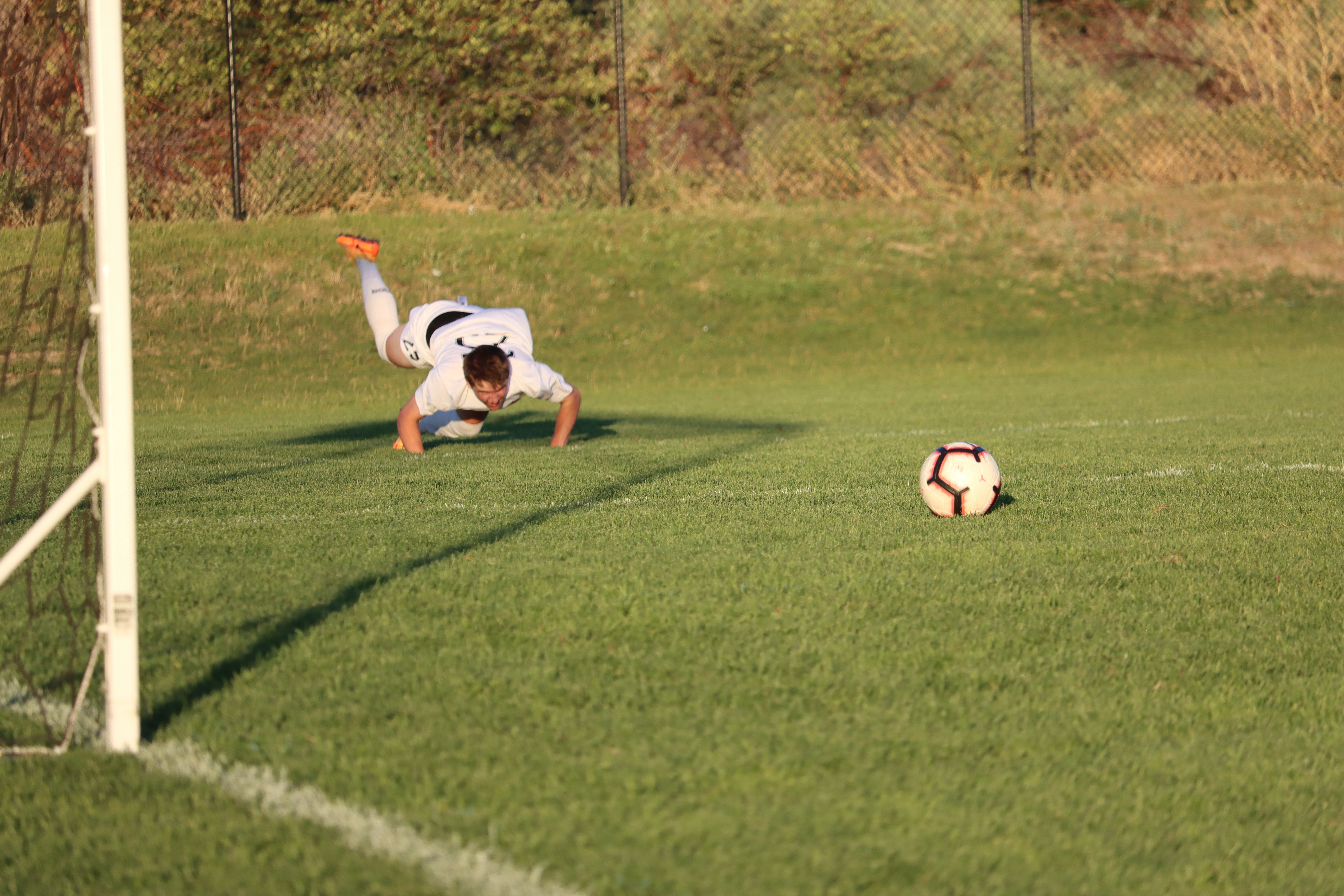
The coach's wife who is the team manager asked me to take photos of all the boys. Here are a few of the many I took. 


In for a goal.

Drive for a goal. 


Nothing on the ground.