Monday, May 14, 2018

Surabaya Church Bombings

The Surabaya 2nd Branch of The Church of Jesus Christ of Latter-day Saints meets in a chapel in central Surabaya.
 
The Surabaya 1st Branch of The Church of Jesus Christ of Latter-day Saints meets in a chapel in western Surabaya.

In 2007 I was able to meet and interview members from both branches. Here are a few members and missionaries from the 1st branch at the home of Sister Sandra (in pink). I first met Sister Sandra in 1975 where she was a relatively new member of the church in Semarang and I was a brand new missionary.

Also attending that branch was Brother Boenari who was my home teaching companion back in 1977. He still had a photo I gave him back then, plus a new updated photo of my family that I gave to him on that visit to his home.

Brother Boenari's daughter and her family.


This map from Find a Meetinghouse on LDS.org shows the location of the two LDS Chapels.  The First Branch to the west (left) and the Second Branch to the east (right).

On Sunday Morning May 13th, three churches in Surabaya were bombed in a terrorist act. The suicide bombers, with ties to ISIS, all came from one family. The Second Branch house is located between The Santa Maria Catholic Church (#1 on map below) and the Gereja Kristen Indonesia (Indonesian Christian Church) on Jalan Diponogoro (#3 on map below). The bombings took place around 7:30. Both LDS branches begin services at 9:00 am.  Under police direction, both LDS services were cancelled that morning. Two other families were involved in later bombings.


Six members of the same family carried out a series of attacks on Sunday:
1. Two teenaged sons rode motorcycles into Santa Maria Catholic Church and detonated explosives at 07:30 local time (00:30 GMT)
2. The father drove a bomb-laden car at Surabaya Centre Pentecostal Church at 07:35 local time
3. A mother, with her two daughters, carried out a bomb attack on Diponegoro Indonesian Christian Church a few minutes later
There was another suspected terror-linked incident on Sunday night:
4. A bomb exploded at Rusunawa Wonocolo flats, Sidoarjo regency at around 21:00 local time
A second family carried out an attack on Monday:
5. The family of five rode motorbikes to a checkpoint at Surabaya police headquarters and detonated bombs at 08:50 local time.
Source: http://www.bbc.com/news/world-asia-44105279

See also:
http://www.thejakartapost.com/news/2018/05/14/25-killed-in-east-java-attacks-including-13-suicide-bombers.html


Source: http://www.theborneopost.com/2018/05/14/another-family-behind-new-indonesia-suicide-bombings-police/


It is an 8 minute drive from the LDS Second Branch Church to the Catholic Church and a 9 minute drive in the opposite direction to the Indonesian Christian Church.


 Some members of the Surabaya LDS Branch in 1977

 Surabaya LDS Branch house (and missionary residence) on Jalan Irian Barat 1977.

There are many Christians and Christian churches in Surabaya. It is sad to see Indonesian Christians being targeted in a country that has long prided itself as a model of religious tolerance. I highly recommend reading this BYU devotional talk by Alwi Shihab, a respected Indonesian Muslim who calls not just for tolerance but for greater understanding and respect between Muslims and Christians. Here is one quote from the address:

"Let me suggest, dear brothers and sisters, that religious tolerance is not enough. We have often seen—particularly after the tragic events of 9/11 and, most recently, the Danish cartoons of the Prophet Muhammad—that tolerance does not always lead to true social peace and harmony. To tolerate something is to learn to live with it, even when you think it is wrong and downright evil. Often tolerance is a tolerance of indifference, which is at best a grudging willingness to put up with something or someone you hate and wish would go away. We must go, I believe, beyond tolerance if we are to achieve harmony in our world. We must move the adherents of different faiths from a position of strife and tension to one of harmony and understanding by promoting a multifaith and pluralistic society. We must strive for acceptance of the other based on understanding and respect. Nor should we stop even at mere acceptance of the other; rather, we must accept the other as one of us in humanity and, above all, in dignity."

https://speeches.byu.edu/talks/alwi-shihab_building-bridges-harmony-understanding/


Saturday, May 5, 2018

Not as they were (Changes for better and for worse at the BYU Jerusalem Center)


My TA this semester in my Middle East geography class studied at the BYU Jerusalem Center last year. We have had several good conversations over the semester comparing notes about our varied experiences of living and studying in Jerusalem. In our most recent conversation it came to my attention that the only community service students during her semester were allowed to do was to assemble hygiene kits in the parking garage for distribution to needy Palestinians. It is a great project and it is one that our family also participated in during our stay at the JC (2009-2010). http://beitemmett.blogspot.com/2009/09/latter-day-saint-charities.html Unfortunately other service projects are no longer an option. This got me to thinking that when it comes to Mormons and BYU in Jerusalem and the Holy Land, things are not as they were.


 Assembling hygiene kits in the parking garage of he BYU Jerusalem Center. Fall 2009

Using personal experiences from my 1982 BYU Study abroad in Jerusalem, my dissertation year (1988-89) in Nazareth and our family's stay at the Jerusalem Center (2009-2010), plus some information gathered from students and friends who have lived in the area, I want to reminisce about how things have changed. I am not in a position to know exactly what the thinking has been behind the changes over time, but in some instances I wonder if change has always been for the better. I also wonder why some changes implemented at a specific time for a specific purpose remain in place when no longer of relevance.


At an orphanage in Bethlehem, fall 1982.

Service

When I studied in Jerusalem in 1982 the BYU students lived at Kibbutz Ramat Rachel.  Our main service option during that semester were weekly visits to two orphanages (one for disabled children) in Bethlehem. On differing days of the week small groups of students would ride the local Arab bus to Bethlehem where we would spend a couple of hours playing with the children. It is from these children that I learned how to say all of the colors in Arabic (using the stripes on my shirt--in the photo above--as a guide) and with whom I had lots of fun asking them their name in Arabic (shu ismak? shu ismik?) and then watching them laugh and giggle as I tried my best to write it and spell it correctly in Arabic. One of our visits was on the day after hundreds of Palestinian refugees were massacred in the Sabra and Shatila refugee camps in Israeli occupied South Beirut. It was an eye opening experience when the very politically aware children came up to us American students and asked us who we liked "Israelis or Palestinians?"

When our family arrived in Jerusalem in August 2009, many of the service options for the students were being dropped. We were told that because of swine flu fears students would no longer be allowed to go to a local hospital to hold and comfort babies. When the director (whose brother was the Lutheran bishop of Jerusalem) of the Augusta Victoria preschool, which Will was attending, asked if students could come and volunteer like they had done in previous semesters we were told no by JC administrators who suggested that the children might be adversely affected by attachment loss when the students stopped going. As a mother of one of the students, Marie did volunteer by helping with songs and costumes for the Christmas program. During our year, the students were only allowed to participate in two service projects out in the community. One was a program run by a local charity that arranged for students to visit home bound residents in the Christian Quarter of the Old City. The other project was painting large murals on the school room walls of the Princess Basma Center for Disabled Children which we painted during a school break so there were no interactions with anyone other than school administrators. This school was located on the Mount of Olives near the Jerusalem Center. To see more about his project go to this blog post: http://beitemmett.blogspot.com/2010/09/mural-painting.html


Mural painting, summer 2010

I know that mural painting continued for a few years after our stay in Jerusalem, but it is no longer an option. Perhaps because all the walls were painted, but more likely because it is part of an on-going shift in policies in order to insulate the students from any community service beyond the hygiene kit assemblage. I realize that there are issues of security, but as far as I know service opportunities in the Arab community are always warmly welcomed and have never posed a problem to the students. Caution is a concern, but it should be balanced with a realization that much good comes to all parties involved when the BYU students are out in the community making friends and doing good. My TA felt like the one missing piece of an otherwise enjoyable semester in Jerusalem was the lack of opportunities to have meaningful interactions with locals.

Visitors welcomed and questions answered

During my Fall 1982 study abroad the BYU students were organized into our own LDS branch which met on Saturdays in our classroom at the kibbutz. I was a counselor in the branch presidency with a faculty member serving as branch president. During that semester we welcomed three young men (Christian Arabs from Nazareth and Jerusalem) to our meetings and activities. The college student from Nazareth was studying at Hebrew University. He had read in Reader's Digest about a free book--The Book of Mormon--and sent in a request. The book was delivered to him by a senior service couple who then invited him to attend services in our branch. Eventually two of these men ended up in the United States where they decided to join the LDS Church.

Another young man who was an Israeli Jew who lived and studied at a nearby yeshiva also enjoyed coming to visit with us foreigners. I don't remember the specifics but he met some from our group and expressed interest in learning more about our unique religion. To do so he would sneak out of his yeshiva on the Sabbath and walk over to the kibbutz for a visit. A few of us became good friends with him. One Friday night, in a reciprocal agreement to learn about each other's religion, he invited me to his yeshiva to welcome in the sabbath--complete with meal, prayers, and singing. So as to not raise any questions, he chose to introduce me as his cousin from New York. I was worried that whole night that my cover (and his) might be blown by some shibboleth. Fortunately I was not found out to be a gentile. It was a wonderful experience.

In 1982 there was no wall between Bethlehem and Jerusalem and people moved freely between the two cities. After our visits to the orphanage we would often hangout in Bethlehem. We made friends with several young Arab merchants at a souvenir shop near Manger Square. We invited them to our Halloween party at the kibbutz and then later in the semester two of these friends (Mufeed and Majdi) who were brothers invited us to their home for their wedding celebration (the two brothers married two sisters from Hebron). Subsequent BYU groups carried on this friendship and eventually they were introduced to a third brother (Shaban) whose shop in Jerusalem is still a favorite shopping spot for BYU students.

Three female BYU Study abroad students with friends in Bethlehem. The brothers of Shaban are on either side of the student in the center of the front row. One of the Christian Arab men who attended our branch and later joined the church is in the far back. Fall 1982.

This openness to talk about religion and to welcome visitors to Mormon worship services and activities all changed when BYU entered a non-proselyting agreement with the Government of Israel in order to curtail opposition to the soon to open BYU Jerusalem Center. That agreement turned Mormon services in the Holy Land to "Mormons Only" services as opposed to every other church building around the world that is labeled with a sign saying "Visitors Welcome." Students can no longer invite people they meet to come with them to church. It also required all BYU students and personnel to enter into a signed agreement stating that they would not teach people about the Church or even answer questions about the Church. This restriction was then extended out to all Mormons in the Holy Land. That meant that during my year in Nazareth I was expected to not answer questions about the Church (as a University of Chicago student I did not have to sign the no proselyting agreement required of BYU students).


Upholding the restriction was often times problematic. In my daily interactions with Nazarenes, I found that the easiest way to not give offense when turning down hospitable cups of coffee was to explain that coffee was forbidden in my religion. The common follow up to that explanation was: "what religion forbids the drinking of coffee?!" I would then say the Mormon religion. Then I would be asked: "What is a Mormon? What else do you believe?" And then with great angst I would say as little as possible. Usually I would only explain (because I was a dutiful Mormon) that it was a small Christian sect that uses the Bible and the Book of Mormon. At that time I was under the false assumption that all proselytizing was forbidden in Israel so it was eye opening for me to see Hare Krishnas and several Protestant groups openly preaching religion in Nazareth. The ban on talking about ones religion was a BYU contract and only required of Mormons.

Our two oldest children attended the Anglican International School of Jerusalem during our year long stay in Jerusalem. As children of BYU faculty they were expected to not talk about the church with non-members either. Trying to do that at the Anglican school proved to be a challenge. Like me, my sixth grade daughter found it very confusing to try and figure out how she could explain her abstinence from tea to other students without bringing up the Church.

In a land where religion is such an important identifying factor, the mental gymnastics our family  went through trying to figure out how to interact with people without talking about religion is nothing compared to what local Mormons have had to go through. During my year in Nazareth, I attended the Galilee Branch in Tiberius. At the time most of the members in the branch had ties to Judaism either through ancestry or marriage. Their daily interactions at work and school were in the Jewish Israeli sector. With the ban on answering questions about religion, most of the LDS families in Israel found it easiest to encourage their children to just let people assume they were Jewish. Doing so spared them the awkwardness I had felt of saying I was Mormon but then being expected not to say anything about Mormonism. Years later parents started to discover that their children had not been able to navigate very well their double life of being Mormon at home and at church on Saturday and a "closet Mormon" acting like a secular Jew at school and in the community. The sad fallout of this predicament (as explained to me by one of the parents) is that almost all of these children, now adults, have drifted from the Church. 

The non-proselyting agreement has had positive impacts. First the Jerusalem Center might never have opened without the agreement (although local members of the Church and moderate Israeli allies felt BYU did not need to sign away basic religious freedoms and with a fight could have obtained approval anyhow). Secondly, BYU and the Mormon Church are now known for their honor and integrity in (strictly) upholding their part of the bargain. However, from my limited perspective, I wonder if the agreement is still needed. Israel is a country where there is freedom of religion. People are free to openly talk about their religious beliefs. All other churches are open to visitors. In a 2017 survey "84% of the adult Jewish public expressed its agreement that Israel should uphold freedom of religion and conscience." http://hiddush.org/article-22135-0-Israel_Religion__State_Index_2017.aspx  In a 2016 Pew Survey, 60% of Israeli Jews indicated that they believe "religion should be separate for government policies."  https://rac.org/blog/2016/03/17/6-statistics-remember-pews-survey-israelis For many Israelis what this really means is that they are not happy with the Orthodox minority dictating national policies. It was Orthodox Jewish opposition to the Jerusalem Center that forced the non-proselyting agreement. It is my opinion that most Israelis would stand by BYU in restructuring the agreement so that questions about beliefs can be answered and visitors can attend LDS religious services. If needed a ban on formal missionary activities could still be upheld. 

Bethlehem Branch

When the BYU center reopened in fall 2006 after a several year closure following the violence associated with the second intifada, one of the new regulations was that BYU faculty and students could only visit Bethlehem once each semester with a limited purpose of visiting the Church of the Nativity, Manger Square and Shepherd's Fields. This ban was based on the wider BYU policy of restricting travel to areas of the world on the US State Department travel advisory list--which has long included both Israel and the Palestinian Territories. It was also based on the concern by Church leaders that students had not been to Bethlehem for several years and so they wanted to go slowly and make sure it was safe again.

When we arrived in Jerusalem in 2009, there were three LDS members (Arab Palestinians) living in Bethlehem/Beit Sahour. Because of the security/apartheid wall, it was very difficult for these members (and other Arab members living in other parts of the West Bank) to attend Jerusalem Branch services in the BYU Jerusalem Center. As a result, that fall one of the BYU service couples was assigned by the branch president to hold Sunday gatherings in the apartment of one of the members. That couple extended an invitation to our family to join with them on several Sundays that fall. Given the travel ban, we had to get special permission from Jerusalem Center administrators each time we went to Bethlehem. The two brethren, who had joined the Church years ago while working abroad, both had non-member wives and children. Marie and the kids were great at fellowshipping the wives and children. We became good friends during these visits. On Christmas Eve we were invited to the sister's house in Beit Sahour for a wonderful gathering with her family and with her LDS friends from Bethlehem and Jerusalem.

Christmas craft project for Primary children attending the Bethlehem group one Sunday in December 2009.

One of the brothers from Bethlehem sold white baby blankets (perfect for baby blessings) that students really enjoyed buying as a souvenir from Bethlehem. Each semester one of the BYU administrators would inform this brother of the day we would be visiting Manger Square so he could be there ready to sell his baby blankets. It was a win-win deal. Many students enjoyed buying a unique souvenir from a fellow Mormon in Bethlehem who was doing his best to support his family.

The following year (2011) new policies put greater limitations on interactions with the Bethlehem saints. The only BYU folks allowed to meet with the Bethlehem saints on Sundays were district leaders and the service couple assigned to serve in the newly organized branch. Additionally, the baby blanket brother was no longer informed (faculty were told not to communicate with him) about when the students would be in town so his blanket sales dropped. These policies, which are very isolating to the Bethlehem Saints, remain to this day.

Security is the over riding reason for limited travel to Bethlehem, and yet the apartment where the branch meets is within a two minute walk from the entry gate into Bethlehem. To come and go on a Sunday is not a dangerous outing. A policy of not favoring one merchant over another (given the cut-throat olive wood business) is the reason for not supporting the Mormon merchant. However, selling baby blankets is not cut-throat; there are few if any other merchants who have tapped into the baby blanket business. Plus given the sectarian nature of relationships in the Middle East, it is just assumed that people will generally give first business preference to fellow members of their "tribe".

During our stay in Jerusalem I served as Elder's Quorum Counselor and then EQ President. Normally as part of these leadership callings I, like other leaders in the branch, would have gone to visit the isolated members of the branch living in the West Bank. Frustratingly, any leaders with BYU ties were not allowed to make such visits. Instead I assigned a non-BYU graduate student doing dissertation research in Jerusalem to home teach some of the Arab families living in the West Bank. It was OK church policy-wise for him to travel to the West Bank but it was not OK BYU policy-wise for me, a BYU professor, to make those same visits. The only time that year that BYU affiliated branch leaders and BYU affiliated members were able to meet with branch members living in the off limits West Bank was during a one time branch party in "neutral" Jericho. Branch leaders from the US embassy and from BYU were permitted to go to Jericho which is a Palestinian city easily visited by the church members in the West Bank. That day in Jericho was a delight. We went to Banana Land amusement park, had lunch together near Tel Jericho and then rode the cable cars up to the Mt of Temptation for a branch meeting.

United gathering (April 2010) of Jerusalem Branch members at the Mt of Temptation in Jericho

Permitting increased fellowshipping with the saints in Bethlehem and the rest of the West Bank would certainly be a positive change. The travel restrictions put in place in 2006 were created at the end of the second intifada. An argument could be made that 12 years of peaceful comings and goings on a limited basis by BYU personnel justifies a relaxing of the rules. Also helpful, would be to exempt the Palestinians territories from the current non-proselyting agreement. That agreement was made out of concern that Mormons would convert Jews. Its focus was never about religious discussions with Arabs (Christians or Muslims) and yet it was applied to all areas under Israel's control. Now that Israel has relinquished sovereignty over many aspects of Palestinian daily life and has erected a wall separating the two entities, the members scattered throughout the West Bank should be able to have open conversations about their beliefs and to invite interested relatives and friends to join with them in the Bethlehem Branch.

Galilee Branch

Galilee Branch House. Left half of building.

 Members of the Galilee Branch 1989.

When I was a member of the Galilee Branch we met in a rented house in an upper neighborhood of Tiberius. Since there was no public transportation available on the Sabbath I usually caught a ride with a fellow member from Nazareth. On occasion when that was not an option I would ride a bus over on Friday afternoon and spend the night at the branch house. Members of the branch lived all over the Galilee. Hebrew was the common language (except for me and an occasional UN solider) of all of the members, but it was not the first language. In 1989, members spoke English, Spanish or Arabic as their mother tongue. Over the years that list of languages has grown to include Russian, Armenian, German, Turkish and Taglaog speakers too. Use of the Hebrew language in church services has been restricted to just the sacrament prayers given the fear that publishing church materials (primary manuals would have been very helpful) in Hebrew might be construed as an act of missionizing.

 Galilee branch house in Tiberius

 The view from the branch house.

In 2007, the Galilee Branch moved to a beautiful house on a hill over-looking the Sea of Galilee. The Church bought and renovated the building. A service couple from the BYU center was assigned to live in the house, to serve in the branch and to render service across the Galilee. Their car was also a main stay in transporting families who relied on public transportation (which doesn't run on the Sabbath) for travel. Given technicalities I am not familiar with, this new building along with any other LDS meeting place in the Holy Land--mainly the Tel Aviv branch meeting place--are all overseen and managed by the company that oversees the Jerusalem Center facilities.

A few years ago, BYU service couples were no longer assigned to live and serve in the Galilee Branch. And then last year, with no given reason, the Galilee Branch house was shuttered and the members were organized as a dependent group of the Tel Aviv Branch. They were told to attend the Tel Aviv branch once a month and on other Sabbaths they were provided a rented hotel room in Haifa to meet in. They were also told they may not hold sacrament meetings as families in their homes, even when cars break down and transportation is not available. This all has been a devastating blow to members in the Galilee. Shifts in BYU Jerusalem Center service couple and car assignments, along with unknown issues associated with a local company over-seeing Church properties are all part of the mix as to why they can no longer meet in in the beautiful Tiberius Chapel.

Non-BYU Students

  BYU Jerusalem Study Abroad Students Fall 1982

From its inception, the BYU Study Abroad program has focused on helping Latter-day Saint students develop a deep love and understanding of the Bible and of Jesus Christ. The program has also focused on helping students to interact with and better understand the various religions and peoples who live in the Holy Land. Of the 39 students (Israel's invasion of Lebanon in the summer of 1982 really cut down enrollments) who participated in the fall 1982 study abroad nearly half were non-BYU students--most of whom were from the University of Utah. Latter-day Saint students willing to uphold the BYU honor code were always allowed to enroll in the Jerusalem program. 

That all changed in 2006 when the center reopened after being closed for five years. Because of concerns of safety and of wanting to not have to deal with problematic students, a decision was made to limit the participants in the first few semesters to just junior and senior students from the three BYU campuses. Eventually the program was opened up to any full time BYU, BYU Idaho or BYU Hawaii student who had attended BYU for at least two semesters. It was also decided to limit the number of students to 80 (two bus loads), half the capacity of the center. Over the years there has always been talk of adding a third and a fourth bus load of students bringing the number back up to 160 but it has never happened. The Jerusalem Center sits half empty in part because enrollment numbers have not climbed to pre-2001 levels. Rising costs, safety concerns of living in the volatile Middle East, and the age change in missionary service (which has meant fewer women applicants now that they can serve a mission at a younger age) are all factors. 

Pre-2001 enrollments have also not happened because non-BYU students are still not allowed to participate. The initial reason of needing mature, BYU proven students to help re-open the center has now been replaced with a reason that having non-BYU students participate creates a two tier structure at the center: most BYU students find themselves focused on getting good grades that will automatically appear on their transcripts, while the non-BYU students are less concerned about grades and GPAs because they can chose whether or not they have the BYU grades transferred to their home university transcripts. Thus one group feels like they can go out exploring and having fun while the other feels compelled to spend more time in the Center studying. That dichotomy has always existed. Sadly, even children of Jerusalem Center faculty who are enrolled at other universities are not allowed to enroll in the BYU Jerusalem Program while their parents are serving at the Jerusalem Center. 


In 1982 our study abroad group took an afternoon walk through the rocky hills of Samaria in the West Bank. At the time, this was considered to be a safe thing to do. The current ban on random walks through the West Bank is an appropriate change in policy and one that still makes sense. Not turning students loose to wander the streets of Bethlehem is also understandable (although I personally felt no danger in taking my family to the city and exploring). Not so understandable is why students are not encouraged or enabled to do service projects within Jerusalem, particularly in places that have been safe and welcoming in the past like nearby hospitals and schools. Similarly it would be helpful if Jerusalem Center policies allowed faculty and perhaps even students to visit the Bethlehem Branch. They could provide talks and musical numbers, friendship and fellowshipping. Reopening the Galilee Branch House and re-assigning a senior service couple to help out would bolster that beleaguered branch. The Galilee and Bethlehem branches are the two indigenous branches in the Holy Land. Strengthening them will ensure a lasting presence in Israel/Palestine for the LDS Church. Allowing non-BYU students to once again enroll at the BYU Jerusalem Center would mean that many more young Latter-day Saints would be blessed by living and studying in the Holy Land. And finally re-negotiating the non-proselyting agreement would allow Mormons to act like any other religious group in Israel. They would be able to live their religion openly, to answer questions without any fears and to welcome friends to worship. Change is necessary and good, but so too is evaluating why changes were made and then considering if those changes should be lasting or be changed again.

Wednesday, April 18, 2018

New Orleans, Mississippi and Memphis


The French Quarter as viewed from the top of the Marriott.


Last week I traveled to New Orleans for the annual meeting of the American Association of Geographers. I did the normal conference things. I presented a paper: "Local Attitudes and Approaches to Tsunamis in Southern Indonesia.” It was part of two special sessions held in honor of University of Chicago geography professor Marvin Mikesell, who passed away last year. Eight former students of Mikesell presented papers. Afterwards we all went to lunch. It was great to gather with fellow Chicago geographers, some from my era and some from before my time.


I ate a lot of delicious food, including this shrimp jambalaya.


I gathered for a dinner with the three BYU faculty attending the conference and nine BYU geography grads, all of whom are now professors or PhD students around the country.


And I attended other paper sessions and the presidential plenary session. Of greatest interest to me on this trip were the two sessions I attended with very interesting papers on the confederate memorial debate and the plenary session on racism in New Orleans.

Quotes referring to the taking down of four confederate monuments in New Orleans last year.

The Lee Memorial.


One paper looked at ways blacks in New Orleans are trying to memorialize (via paper monuments) influential blacks from the city. The underlying point was why have blacks not been memorialized in the city.


"And it immediately begs the questions: Why there are no slave ship monuments, no prominent markers on public land to remember the lynchings or the slave blocks, nothing to remember this long chapter of our lives, the pain, the sacrifice, the shame....all of it happening on the soil of New Orleans.

...These monuments purposefully celebrate a fictional, sanitized Confederacy. Ignoring the death, ignoring the enslavement and the terror that it actually stood for..."


The mayor is ruining our city.
[He's] giving the middle finger to the citizens of this city.

They'll put a statue of Trump there now.


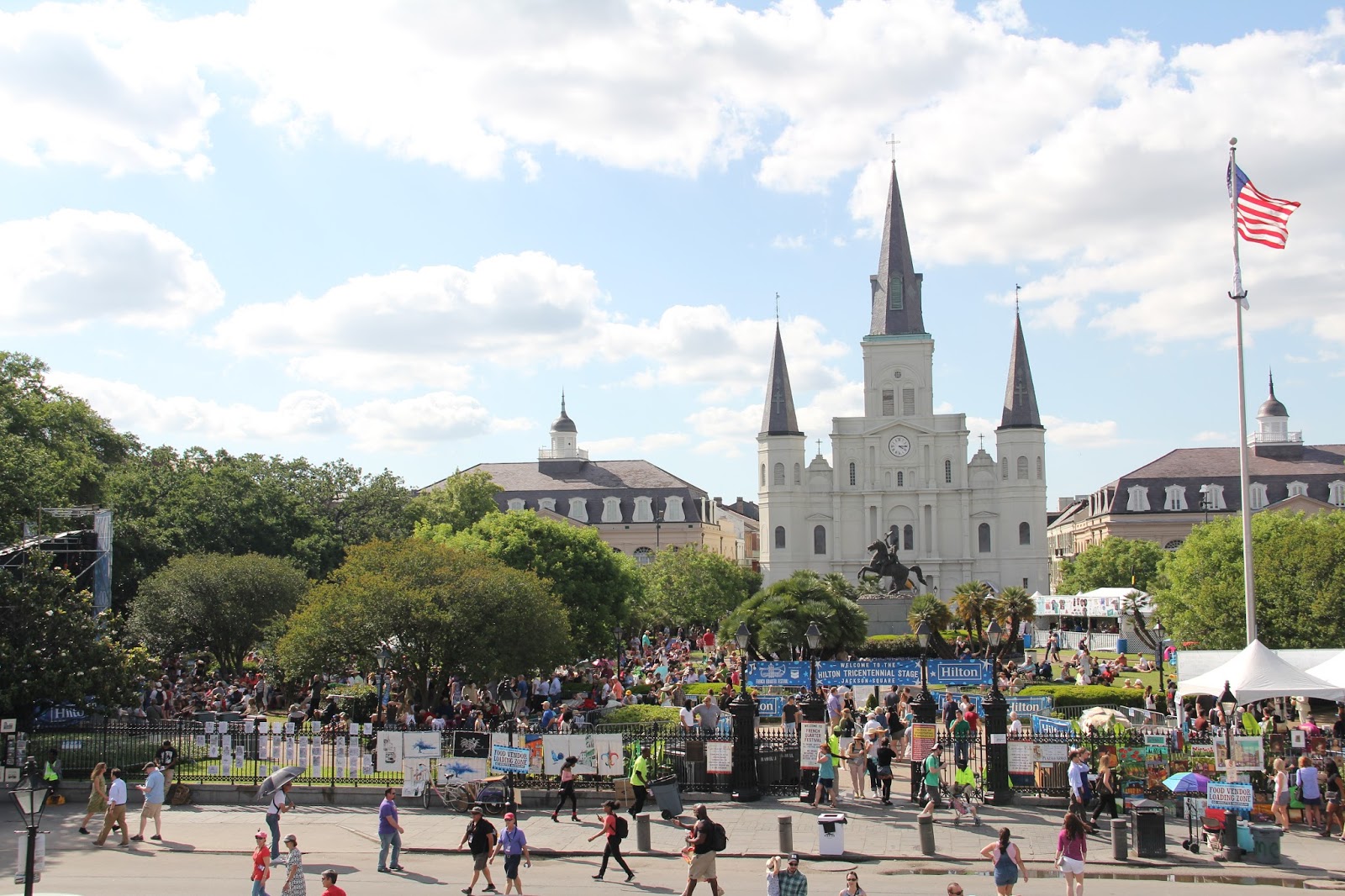
For the past three years at BYU I have been team teaching a course on nationalism. Each semester new issues involving nationalism were discussed (populist nationalism, Trumpism, Brexit, ethnic nationalism etc.). One of the topics from last semester's class was the whole Confederate monument debate. I therefore set out to see what I could see about monuments in New Orleans (and later Mississippi). Andrew Jackson still stands in Jackson Square in the French Quarter.

Joan or Arc still stands in front of the French Market


In Lafayette Square there is no statue of Lafayette, but there are statues honoring John McDonogh (a local educator) (front), Henry Clay (left) and Ben Franklin.


Also still standing is the first causality from Louisana in the Civil War. A fitting tribute to a local boy who was doing his duty.


No longer standing is the statue of Jefferson Davis, President of the confederacy. All that remains is the pedestal. This is located just across Canal Street from the Dreux statue shown above.

 Source: https://en.wikipedia.org/wiki/Jefferson_Davis_Monument


Last fall a statue of a black woman was temporarily placed on the pedestal of Jefferson Davis. I learned about this statue in one of the sessions. I didn't know how temporary the placement was (it was only to make a music video) so I ventured out to find the woman only to find out the pedestal empty once again.

http://www.nola.com/arts/index.ssf/2017/11/jefferson_davis_monument_video.html


The next day I sought out the empty pedestal where Robert E Lee (who never set foot in New Orleans) once stood.


I am all for confederate monuments at burial sites in cemeteries or at battlefields where soldiers died, but I am not a big fan of monuments erected during the Jim Crow era or the civil rights era as an intentional act of white supremacy. One local I talked to wanted to keep the four removed monuments in New Orleans because of the art and history associated with the monuments. However to keep the peace she suggested that the monuments could maybe be relocated to less central locations perhaps along the lines of a cemetery of Confederate memorials. I think Russia has similar collections of removed statues of Stalin and Lenin.


The Jefferson Davis monument was dedicated in 1911, the Lee monument in 1884. Research by the Southern Poverty Law Center shows a timeline of when all of the  Confederate monuments were erected. Most were around the turn of the century during the height of the Jim Crow era which suggests that there were racist motives involved and not just a desire to honor Civil War soldiers.
 
https://www.splcenter.org/20160421/whose-heritage-public-symbols-confederacy


One morning I went to breakfast (grits and cajun shrimp) with a good friend from graduate school and his wife (all three of us did dissertation research in Israel/Palestine at the same time). Afterwards I joined them for a walking tour of the French quarter.


I returned to the French Quarter the next afternoon to check out the music at the French Quarter Festival.


St John the Baptist Parish Church.

On Friday morning I rented a car and headed out for a three day road trip. First stop was Whitney Plantation about 45 minutes west of New Orleans in St John's Parish. It is a plantation where everything is told from a slavery point of view. I read about it last year and put it on the top of my New Orleans to-do list. I highly recommend it. This Smithsonian article gives a great overview of what the plantation is about and what can be seen.
https://www.smithsonianmag.com/history/inside-americas-auschwitz-180958647/


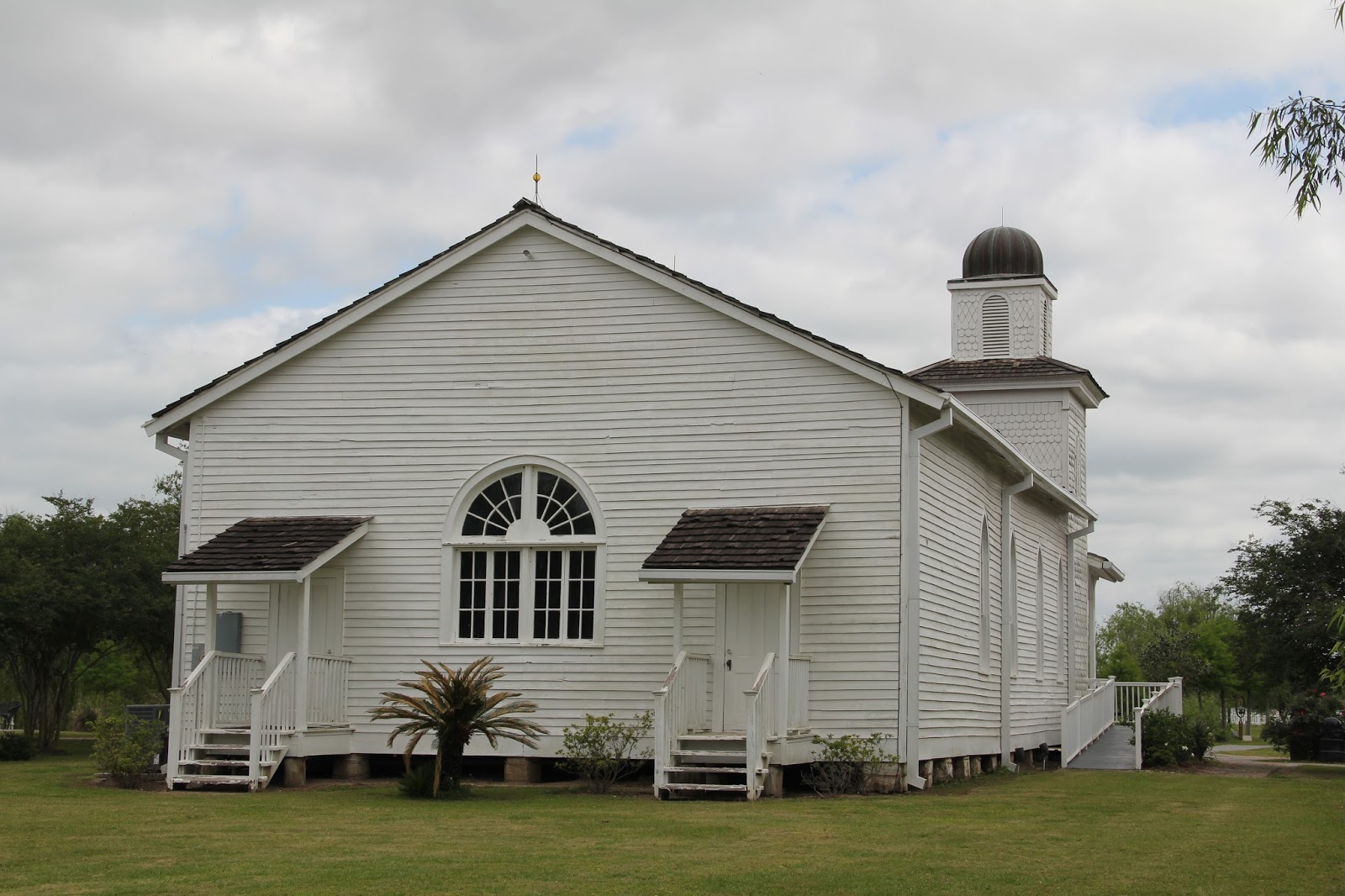
The 90 minute guide tour begins in the Antioch Church (named for an early Christian center that veils the real name of the church-- Anti-Yoke--which was founded by former slaves who were against the yoke of slavery).


Much of the tour focuses on the stories of slave children. Statues of children are found throughout the plantation. They commemorate the thousands of children who died on the plantations of St. John's Parish. They also commemorate the thousands of stories collected by a US government program during the Depression to record the stories of the last generation of living slaves. These slaves in their 80s and 90s told what it was like to be a salve.


The Wall of Honor monument memorializes by name all of the people who were enslaved on Whitney Plantation.


Some slaves maintained their African name (which provide links to native tribe and religion) but most received new names.


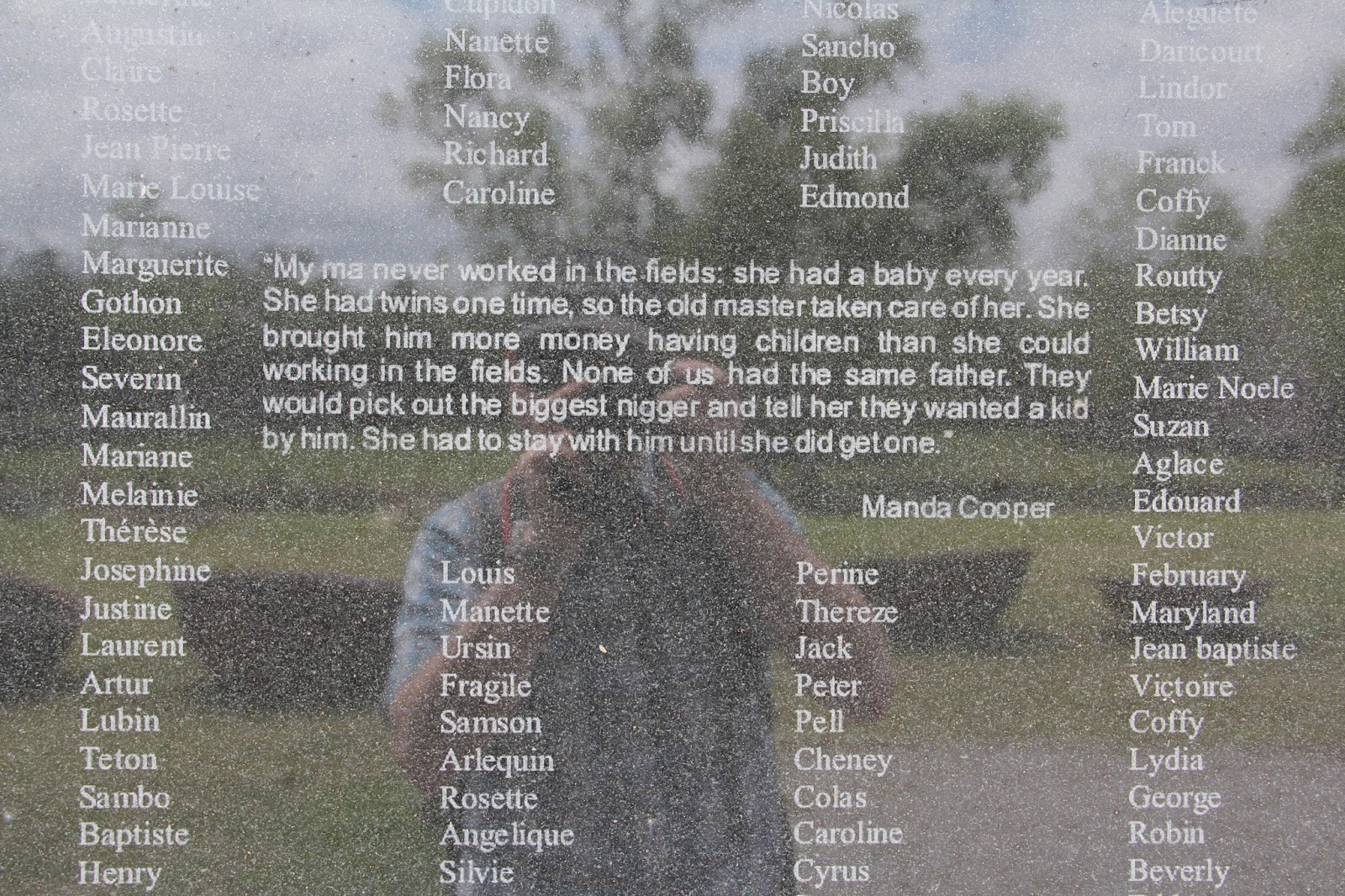
The second monument which records the names of 107,000 slaves forced to labor in Louisiana.


Interspersed among the names are stories told as part of the Federal Writer's Project where former slave children were interviewed.


Field of Angels Coming Home By Rod Moorehead


A third memorial lists the names of all the slave children who died before the age of three in St. John's Parish


Memorial to those slaves who died in the German Coast Uprising.


Slave cabins.

Sugar cane carts and fields in the distance.


The kettles were used to crystallize the sugar.

Slave jail.

The big house. The tour of the house was very brief.

 Carriage house


Cook house.

Our guide and group. The information presented and the stories told were eye-opening and sobering. Such a tragic part of American history that still impacts society today.

Cisterns to catch rain water.


The upper veranda that looks out on the slave cabins.


Sugar cane still grows in the fields surrounding the plantation.

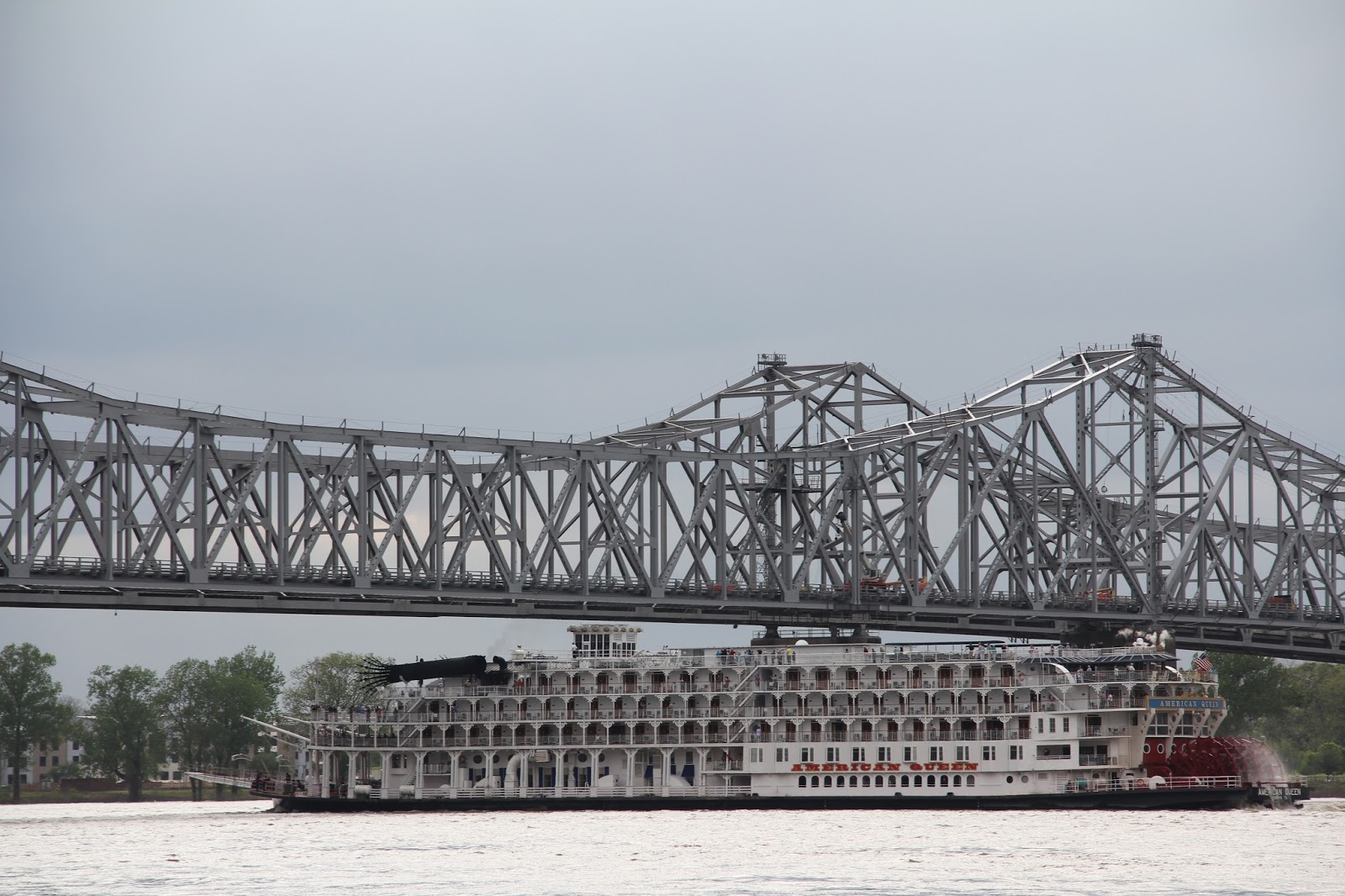
Mississippi waters, levee and sugar cane.


 I then headed north to Natchez Mississippi.


It is named after the Natchez Indians (why do I not remember ever hearing about this Native American tribe?) who built ceremonial mounds in the area.


 Great Sun's Mound and Temple Mound at the Grand Village of the Natchez.


I then headed north along the beautiful tree-lined Natchez Trace Parkway to Emerald Mound--the second largest Mississippian Period ceremonial mound in the US.


I exited the parkway near Jackson Mississippi and then drove further north on I-55 to Batesville where I stayed the night.


Next morning I drove to Memphis in the rain. My primary purpose in coming to Memphis was to visit the National Civil Rights Museum which is housed in the Lorraine Motel where Martin Luther King was assassinated fifty years ago this month. Like Whitney Plantation is is well worth a visit. Given the still troublesome status of race relations in America I think every American should put these two places on their must visit list.

 The wreath marks where King was standing when he was killed.

The museum starts with an exhibit (no photos allowed) of King's life and legacy. It then shifts to slavery.


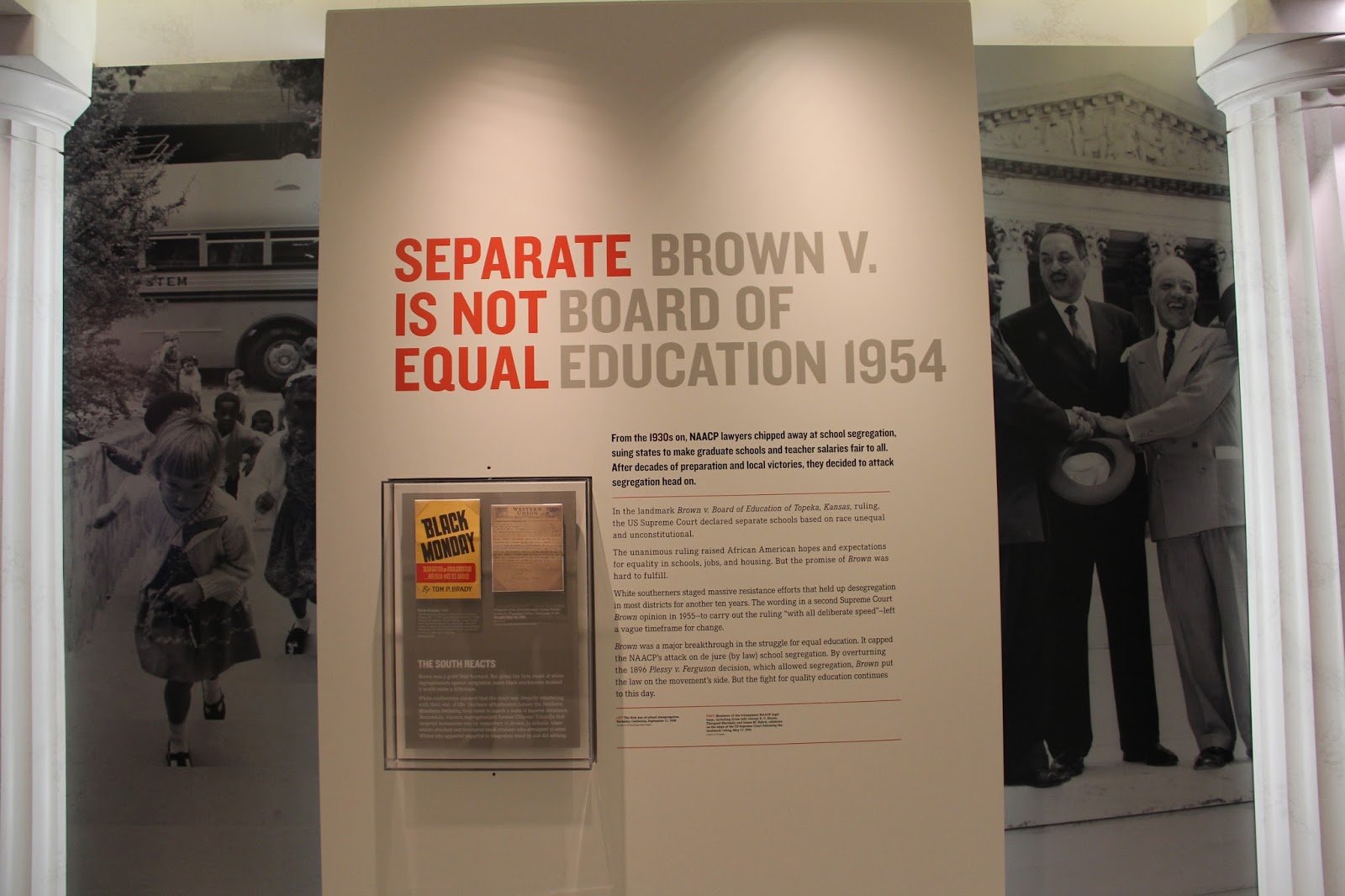
Exhibits then focused on migration out of the south and the racist policies and attitudes the lasted for almost a century after the Civil War.


The focus of the majority of the museum is then on the civil rights movement.


Rosa Parks and me.


The freedom ride was one of my favorite forms of protest. National laws forbade segregation on interstate buses and in bus stations so blacks set out to ride buses through the south to expose local racist laws. Southerners resisted which only served to publicize more widely southern segregation.


Violence ensued.


Blacks boycotted, walked, rode, sang and sat their way to freedom.

When adults were detained, children took up the banner.


 Six children were killed in one of the bombings in Birmingham.


This graph of blacks elected to public office shows the short lived participation of blacks after the Civil War followed by the decline during Jim Crow.


Martin Luther King stood not only for civil rights, but for broader human rights, an end to the Vietnam War and for the uplifting of the poor. He came to Memphis to lend support to sanitation workers who were grossly underpaid and treated.


The night before he was assassinated he gave he last speech: "I've been to the mountaintop."
View excerpts here: https://www.youtube.com/watch?v=Oehry1JC9Rk  "We as a people will get to the Promised Land!"

 King's motel room.


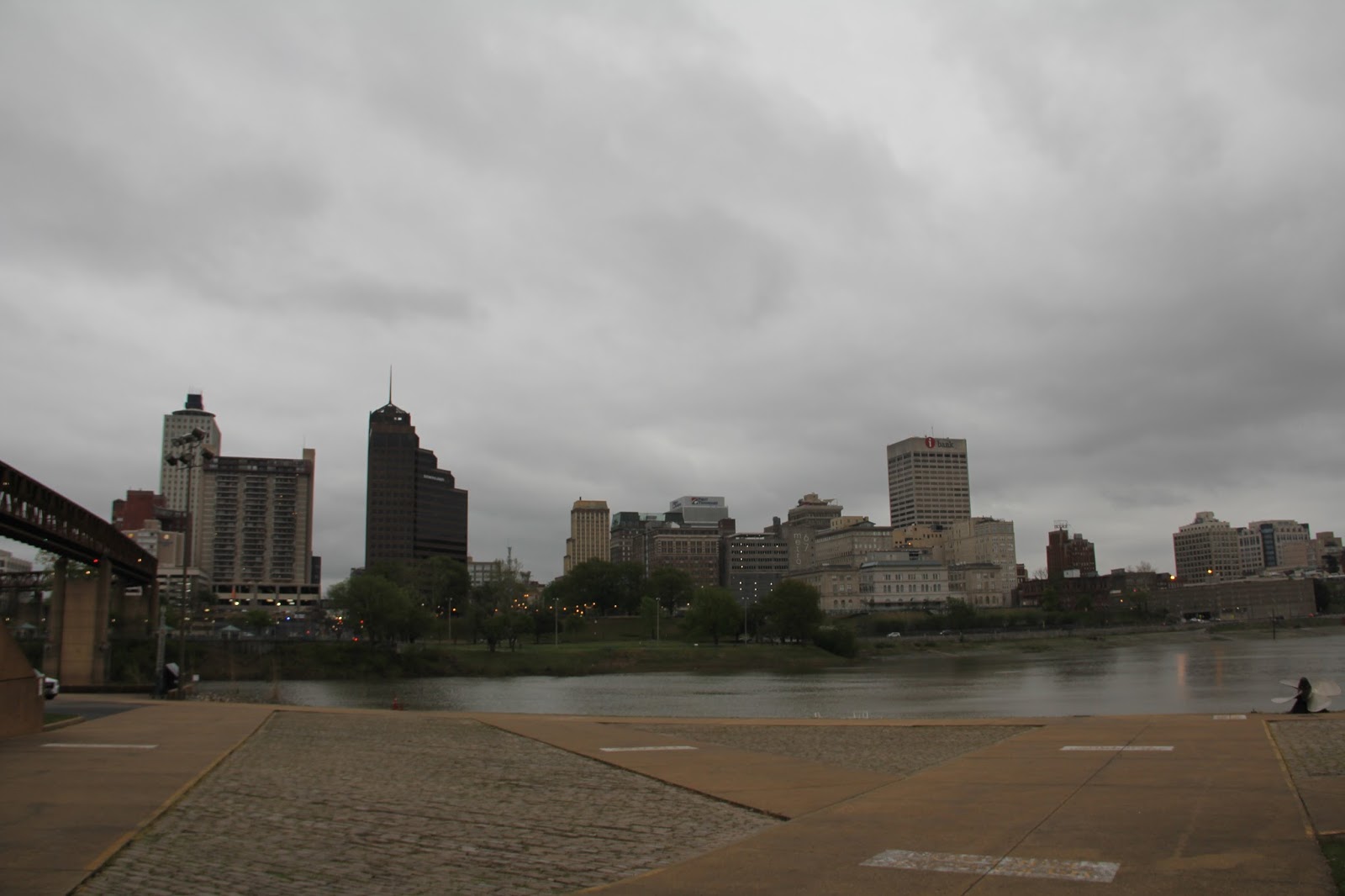
 Next stop was the Mississippi River Museum on Mud Island adjacent to downtown Memphis. 


One of the exhibits highlights all of the various genres of music that have developed in the Mississippi River valley.

Most exciting to me was a model (extending perhaps 100 yards) of the lower Mississippi with every bend from the Gulf of Mexico to Cairo Illinois.


Where the river meets the gulf.

 New Orleans


 Memphis

 Confluence of the Ohio (right) and the Mississippi at Cairo.

 Ohio River

 Missouri River

 I was hustling to leave as cold and rain moved in when I noticed two barges heading up the river so I stayed to watch. At one point it seemed as if the larger barge to the rear was going to ram the small and slower forward barge.


Memphis barbecue for dinner then back to Batesville.

 The Mississippi Delta


Sunday morning I headed out to explore the Mississippi Delta--known for its cotton growing and for where the blues were born.

A modern day cotton gin.


The fighting Okra of Delta State University in Cleveland.

Beulah from the levee.


Levee bank


Benoit

Another Gin.


Lots of small Missionary Baptist Churches and Church of God in Christ in rural Mississippi. If I had had more time I would have stopped in and enjoyed the service.

Greenville


Cotton themed utility box.


Confederate Monument at the Court House. I knew there was a monument (thanks google for helping me find a list of monuments in Mississippi) in front of the county courthouse (no thanks goggle maps for not showing the courthouse) but it took some driving around town to finally find it.

Erected in 1912.


The words speak for themselves. This is not a monument just to honor loyal soldiers, it is a memorial to the former south where enslaved blacks were an accepted part of everyday life. States Rights is how it was framed, but the right each state was fighting for was the right for slavery to continue. Memorials like this exist as if slavery never happened. They offer no healing from its horrors and lasting legacy. Mississippi has passed a law making it illegal to remove any confederate monuments like this.


Mississippi is the only state to incorporate the Confederate Battle Flag into its flag. Georgia added the Stars and Bars to its flag during the civil rights battle and then removed it when the Olympics came to Atalanta. Some southerners see the Stars and Bars as a sign of heritage and southern pride, others see it as a racist remnant of a time when Blacks lacked civil rights. I side with the latter.

Interstate 10.

Northwestern New Orleans, Lake Pontchartrain and the protective levees that failed during Katrina.


I-55 cutting between Lake Pontchartrain and Lake Maurepas (left)

The mighty Mississippi.